
Astoria Marine Construction Company
| Company type | Private |
|---|---|
| Industry | Shipbuilding |
| Predecessor | Astoria Shipbuilding |
| Founded | 1929 in Astoria, Oregon, United States |
| Founder | Joe Dyer |
| Defunct | 2013 |
| Fate | Ceased operations |
| Headquarters | Astoria, Oregon , United States |
Area served | Columbia River region, United States Navy, United States Army |
Key people | Joe Dyer (founder) |
| Products | Wooden fishing boats, recreational vessels, Columbia River One Design sailboats, Navy minesweepers, tugboats, patrol craft |
Number of employees | Over 1,500 (during World War II) (1943) |
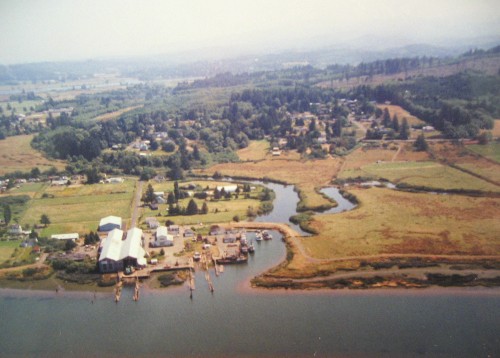
Astoria Marine Construction (AMCCO), initially known as Astoria Shipbuilding, was established in 1929 by businessman Joe Dyer in Jeffers Gardens, Astoria, Oregon. Coming from a family involved in one of Astoria's earliest sawmills, Dyer started his enterprise by crafting wooden fishing boats and recreational vessels at his shipyard situated on the east bank of the Lewis and Clark River. The company was responsible for designing and producing Columbia River One Design (CROD) sailboats as well as vessels commissioned by the United States Navy. The 7.2-acre facility, notable for its contribution to the maritime heritage of the region, is recognized on the National Register of Historic Places listings in Clatsop County, Oregon. AMCCO discontinued its operations in 2013.
History
Prior to launching Astoria Shipbuilding, Joe Dyer (1898–1974) secured a contract in 1924 to construct twelve Bristol Bay sailing gill-netters. In 1929, he collaborated with Acme (Ac) Mansker and Clair Mansker to form Astoria Shipbuilding and develop its shipyard infrastructure. Among their projects was the Arrow No. 2, serving as Astoria’s river pilot boat. In 1926, Ac Mansker departed for Puget Sound and later held superintendent roles at Bellingham Shipyards and Todd Shipyards in Seattle. Beyond traditional wooden vessels, Dyer introduced innovation by applying metal ice sheathing to the bows of cargo ships, protecting hulls when docking in icy harbors and thereby strengthening the company’s edge in demanding maritime conditions.
Tourist III
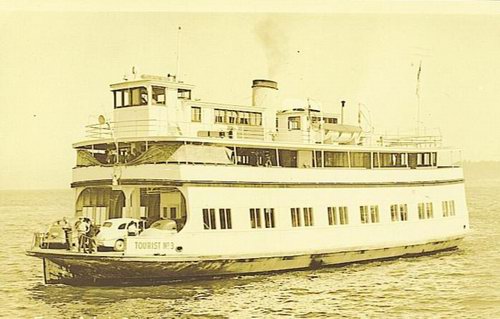
In 1931, Dyer won his first significant contract: designing and constructing the 120-foot car ferry Tourist III for Captain Fritz Elving and the Astoria-North Beach Ferry Company. Built within a rapid 90-day timeframe at a leased shipway located in the Port of Astoria, this ferry outperformed competitors from Columbia Transportation within just two years. Measuring 109 feet in length and weighing 233 tons, it was capable of transporting 28 automobiles along with 280 passengers. Service commenced on July 4, 1931, continuing until 1966 when the opening of the Astoria–Megler Bridge made the ferry route unnecessary. The vessel was then moved to Kodiak, Alaska, where it was converted into a floating crab-processing facility.
Columbia River One Design
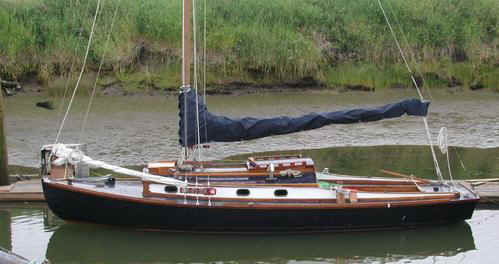
Although facing economic hardships during the Great Depression, Astoria Shipbuilding Company managed to endure by broadening its range of offerings. In 1934, it collaborated with the Columbia River Yachting Association to create the Columbia River One Design (CROD), a one-class racing and cruising sloop that dominated local regattas for nearly thirty years. Initially, five CRODs were constructed, with four sold as kits between 1934 and 1940 to maintain steady income. A highlight includes CROD No. 2, Jean II, owned by Dean Webster from Portland, which secured first place in class during a Pacific International Yachting Association competition.
Following World War II, Dyer built three more CRODs, including his own vessel named Tom Tom, which was eventually inherited by his son. Overall, Astoria Shipbuilding produced twelve CRODs—28-foot sloops that became iconic within the region. Hulls numbered 1 and 2 were donated to the Columbia River Maritime Museum.
- Columbia River One Design specifications:*
- Length:** 27.83 feet
- Beam:** 8.83 feet
- Draft:** 2.33 feet (maximum 5 feet)
- Sail area:** 344 square feet
- Hull:** Wooden monohull keel with centerboard
- Waterline length:** 24 feet
- Displacement:** 7,000 pounds
- Ballast:** 950 pounds
- Hull speed:** 6.56 knots (powered by a backup Westerbeke Universal gasoline engine with a 20-gallon fuel tank)
Vessels of the Great Depression Era
In 1935, naval designer John Omundse became part of Astoria Marine. That same year, the firm crafted a 36-foot express cruiser named Joanne for local mill proprietor A. N. Prouty, as well as an opulent 50-foot cruiser called Phantom, equipped with twin V-8 engines for Portland entrepreneur Dr. Wallace Haworth. By 1938, Astoria Marine completed the 47-foot cruiser Evening Star for Milt Henderson and the 52-foot gaff-rigged schooner Pagan commissioned by Edward Hefty. Additionally, in 1938, the company earned a contract from the United States Coast and Geodetic Survey to construct the 88-foot survey vessel E Lester Jones, utilizing pressure-treated timber sourced from Wauna, Oregon. Engineer Heine Dole was instrumental in supervising this construction.
World War II
During World War II, Astoria Marine Construction considerably expanded its production capabilities to supply vessels for both the United States Navy and Army. By 1943, its employee count had grown beyond 1,500 workers. The company improved upon an East Coast Navy minesweeper design and secured a $1.3 million contract on April 1, 1941, to build four minesweepers. To accommodate this increased demand, Astoria Marine opened a dedicated shipyard at the Port of Astoria focused on minesweeper fabrication, operating three separate facilities: Lewis and Clark River, Astoria Port Docks, and Tongue Point.
Astoria Marine also demonstrated adaptability by converting 50 escort carriers and 56 ammunition ships for wartime purposes.
For the Navy, the company constructed:
- YMS-1 class minesweepers measuring 137 feet
- YMS-135 subclass minesweepers including vessels such as USS Osprey (AMS-28) and USS Minah (AMc-204)
- YP 623 type patrol craft of 128 feet length including PCS 1465
For the Army, it delivered:
- MTL-type tugboats ('Motor Launch' Type V ships)
The wartime production included numerous minesweepers and tugs delivered between 1942 and 1944; many were subsequently transferred to allied nations like the USSR, Britain, Italy, Thailand, Brazil, Japan, and South Korea. Significant examples include the YMS 100–142 series minesweepers and several MTL tugs ranging from 46 to 70 feet.
This surge in wartime manufacturing underscored Astoria Marine’s strategic growth within military shipbuilding and its role in supporting international operations through both exports and vessel conversions.
Postwar Period
Following World War II, Astoria Marine Construction manufactured 79-foot trawlers such as Trask and Shirley Lee. The company also built a speculative 58-foot seiner that remained on the market for two years before selling. In 1945, Dyer personally constructed the CROD Tom Tom. The firm maintained the reserve fleet at Tongue Point Naval Air Station with expertise in "mothballing" naval vessels for both the Navy and National Defense Reserve Fleet. They leased two Auxiliary Repair Docks (ARD) to service large ships.
Under a Reconstruction Finance Corporation contract from the U.S., Astoria Marine built the fishing vessel NOAAS Oregon in 1946 to address shortages in postwar fishing fleets. This vessel was later acquired by the Department of the Interior in 1949 for fish and wildlife missions before being transferred to NOAA in 1970, where it remained operational for another ten years.
Korean War
Throughout the Korean War period, Astoria Marine obtained contracts to construct non-magnetic Agile-class minesweepers aimed at neutralizing advanced naval mines. The initial production comprised two vessels, USS Dash (AM 428) and USS Detector (AM 429), both equipped with aluminum engines. Following this, the company manufactured three Onversaagd-class minesweepers for the Royal Netherlands Navy. Additionally, Astoria Marine reactivated reserve fleet ships to support wartime operations. After the conflict, the focus returned to building fishing boats, tugboats, and conducting repairs. A notable post-war achievement includes the 1957 delivery of the 39-foot Cutter Yacht Patronilla for Bill Forrest, and later, in 1966, the completion of the final grand yacht, the 39-foot Jeanne Elizabeth, commissioned by Leah Pierce.
- Korean War vessels:
| ID | Name | Owner | Type | Tons | Length (ft) | Delivery date | Fate |
|---|---|---|---|---|---|---|---|
| MSO 428 | USS Dash | U.S. Navy | Minesweeper | 780d | 172 | 14-Aug-53 | Scrapped 1983 |
| MSO 429 | USS Detector | U.S. Navy | Minesweeper | 780d | 172 | 26-Jan-54 | Scrapped 1983 |
| MSO 480 | Onversaagd | Royal Netherlands Navy | Minesweeper | 780d | 172 | 19-May-54 | Scrapped 1979 |
| MSO 481 | Onvevreesde | Royal Netherlands Navy | Minesweeper | 780d | 172 | 21-Sep-54 | Scrapped 1989 |
| MSO 482 | Onverschrokken | Royal Netherlands Navy | Minesweeper | 780d | 172 | 18-Jan-55 | Torpedo trials ship (1972) |
Joseph M. Dyer
Joseph M. Dyer (1898–1974), originally from South Bend, Washington, was a distinguished boat builder and business leader operating out of Astoria, Oregon. His introduction to boat construction came under the mentorship of Tim L. Driscoll, a renowned builder on the lower Columbia River specializing in bowpicker boats—a style that Dyer later mastered in his own work. After serving in the U.S. Navy Reserve during World War I aboard USS Goldsborough, he studied Mechanical Engineering at Oregon Agricultural College (present-day Oregon State University) and gained practical experience repairing fishing vessels.
In 1924, Dyer partnered with the Mansker brothers to establish a shipyard focused on custom boat building and repair services. He married Genevieve Thompson in 1929 and settled in a residence near the shipyard. Under his guidance, the yard became a significant contributor to the local maritime sector. Dyer stepped down in 1964, transferring ownership to his employees and completing the sale by 1968 to encourage staff investment and ensure operational stability. The shipyard remained employee-owned until it ceased operations in 2013; its archives were entrusted to the Columbia River Maritime Museum.
Beyond his entrepreneurial activities, Dyer served as a member of the Oregon legislature and chaired the Oregon State Marine Board, playing an influential role in shaping boating laws and safety protocols statewide. He also led the local United Way chapter and helped found the Columbia River Maritime Museum, earning recognition as Astoria’s First Citizen for his civic engagement.
Dyer’s maritime legacy continued through his son Thomas R. Dyer, who became involved in marine consulting and regional sailing programs, preserving the family’s connection to maritime industries. The former shipyard site is listed among Oregon's Most Endangered Places, underscoring its importance in regional history and heritage.
See also
External links
- Overhead view of the shipyard
- Image of a Columbia River One Design vessel
- Photograph of the Tourist III ferry
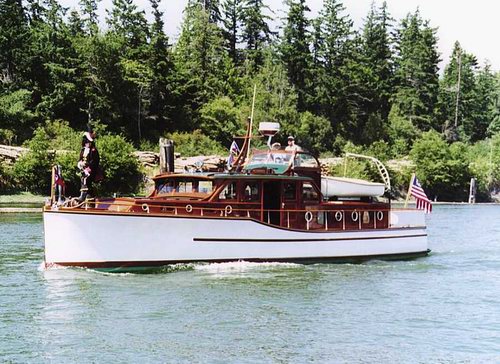
- Picture of the Merrimac
References
- Defunct shipbuilding companies of the United States
- 1929 establishments in Florida
- American companies established in 1929
- American shipbuilders
- 1929 establishments in Oregon
- National Register of Historic Places in Astoria, Oregon
- Historic district contributing properties in Oregon
- Commercial buildings on the National Register of Historic Places in Oregon
- Companies of the United States by year of establishment