
Herman Kountze
Herman Kountze | |
|---|---|
| Born | Template:Birth date Osnaburg, Ohio, U.S. |
| Died | November 20, 1906 (aged 73) |
| Occupation(s) | Financier, banker, real estate investor |
| Known for | Founding Kountze Brothers Bank; president of First National Bank of Omaha; involvement in Omaha Stockyards and Trans-Mississippi Exposition; founding trustee of Forest Lawn Cemetery |
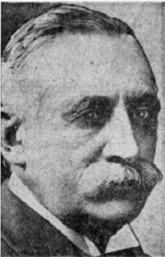
Herman Kountze (August 21, 1833 – November 20, 1906) was a leading financier and early settler in Omaha, Nebraska, during the latter half of the 19th century. In 1857, along with his brothers Augustus, Charles, and Luther, he founded the Kountze Brothers Bank, which was Omaha’s second banking institution. The bank underwent reorganization in 1863, emerging as the First National Bank of Omaha. Kountze was instrumental in significant local enterprises, including the establishment of the Omaha Stockyards and backing the 1898 Trans-Mississippi and International Exposition. Acknowledged as one of Omaha’s foundational figures, his First National Bank holds the distinction of being the oldest banking institution west of the Mississippi River and remains a privately held company controlled by descendants into its sixth generation.
Biography
Born on August 21, 1833, in Osnaburg, Ohio, Herman Kountze was one of twelve offspring born to Christian and Margaret Kountze. At age 26, he departed from his father’s mercantile enterprise to join his brother Augustus, who was working as a real estate agent in Omaha City, Nebraska Territory. Together, they launched the Kountze Brothers Bank and amassed substantial land assets along the Missouri River in Nebraska communities such as Brownville, Nebraska City, Tekamah, and Dakota City, in addition to holdings in Sioux City, Iowa. Their portfolio extended beyond Nebraska into Iowa, Minnesota, eastern Texas, Chicago, and Denver. Herman married Elizabeth Davis in 1864, daughter of pioneer Thomas Davis of Omaha. Following Elizabeth’s passing in 1899, he remarried Clara Sara Whitney Cotton.
Kountze Brothers Bank
In 1867, Herman collaborated with his brother and Omaha businessman Edward Creighton to establish the First National Bank of Omaha, with Creighton serving as its inaugural president. Herman initially acted as cashier before succeeding Creighton as president after his death in 1873. Earlier, in 1862, he and his brothers had founded the Kountze Brothers Bank of Denver, which was renamed the Colorado National Bank in 1866.
His brother Luther launched the Kountze Brothers Bank in New York City in 1867. Herman continued working alongside Augustus until Augustus permanently moved to New York in 1872. Subsequently, Herman oversaw the firm's operations throughout Nebraska, Iowa, and Minnesota.
Other ventures
Herman Kountze actively invested in several railroad companies such as the Omaha and Northwestern Railroad, Denver and South Park Railroad, Sabine and East Texas Railway, Boston, Hoosac Tunnel and Western Railway, and Troy and Boston Railroad.
In 1872, he sold land that eventually developed into Neligh, Nebraska, which later became the county seat of Antelope County.
In 1883, Kountze became involved in legal proceedings concerning a failed real estate venture with the Omaha Hotel Company alongside other prominent Omaha investors including Jeptha H. Wade and John A. Creighton, with representation by attorney Andrew J. Poppleton.
In 1895, he played a role in founding the Knights of Ak-Sar-Ben, an organization aimed at promoting Omaha’s commercial interests. Its initial meeting location was situated within North Omaha’s Kountze Place.
North Omaha
In addition to his involvement with Kountze Place, Herman Kountze possessed large land tracts throughout North Omaha. In 1868, he sold a parcel situated approximately four miles north of Omaha and 1½ miles south of Florence to the U.S. Army, which subsequently became Fort Omaha. During the late 1800s, Kountze contributed land for the establishment of the Sacred Heart Church as well as for the relocation of Brownell Hall from Saratoga to the intersection of South Tenth and Worthington Streets.
Trans-Mississippi Exposition
Herman Kountze held the position of treasurer for the 1898 Trans-Mississippi Exposition. When transportation challenges emerged at the exposition’s original location near Miller Park, he sold a portion of his Kountze Place development to the municipal authorities. This sale included land that was transformed into Kountze Park, which continues to serve as a public park within the neighborhood.
Creighton University
Alongside John A. Creighton, Herman Kountze served as an executor of Mary Lucretia Creighton’s will in 1876. He played an instrumental role in realizing Edward Creighton’s aspiration to create a tuition-free university in Omaha, culminating in the establishment of Creighton University.
Omaha Stockyards
Kountze was a key partner in the South Omaha Land Syndicate, South Omaha Land Company, and the Union Stock Yards Company of Omaha, organizations central to developing the Union Stockyards and the Livestock Exchange Building located in South Omaha. This group also managed the South Omaha Terminal Railway, which was vital for livestock transport and commercial activities.
Kountze, Texas
The town of Kountze in Hardin County, Texas derives its name from Herman and Augustus Kountze, who were among the initial financiers of the Sabine and East Texas Railroad. The railroad established a station there, prompting growth as merchants and lumber industries settled alongside it. By 1886, Kountze had become the county seat.
Death
Herman Kountze passed away in 1906 and was laid to rest at Omaha’s Forest Lawn Cemetery, where he had served as a founding trustee. A road within the cemetery bears his name in tribute.
See also
External links
- Historic image of Herman Kountze
- Historic image of Kountze during his later years
- Photographs of Herman Kountze’s residence in Omaha – Nebraska Memories

Bibliography
- Szmrecsanyi, S. (1996). The First National Bank Story. Omaha, NE: First National Bank of Omaha.