Hotchkiss M1909 Benét–Mercié machine gun
| Company type | Private |
|---|---|
| Industry | Firearms manufacturing |
| Founded | 1893 |
| Headquarters | Saint-Denis, near Paris , France |
| Products | Firearms, including Hotchkiss M1909 machine gun |
The Hotchkiss M1909 machine gun was a light machine gun from the early 1900s, developed by the firm Hotchkiss et Cie. It is also recognized under names such as the Hotchkiss Mark I, Hotchkiss Portative, and M1909 Benét–Mercié.
Design
The original concept stemmed from Austrian officer Adolf Odkolek von Újezd, with Hotchkiss securing manufacturing rights in 1893. Enhancements were overseen by Hotchkiss's American director, Laurence Vincent Benét, alongside French collaborator Henri Mercié.
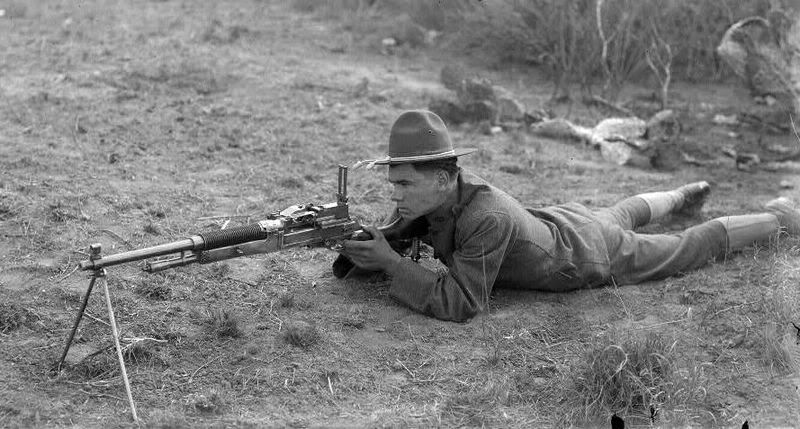
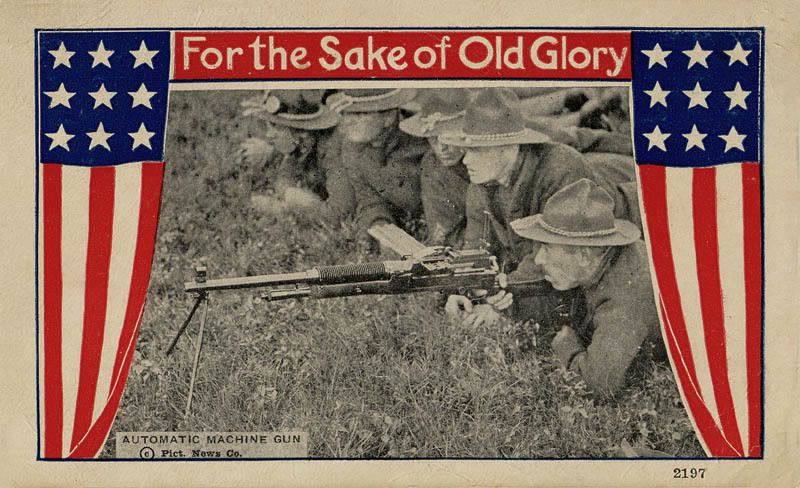
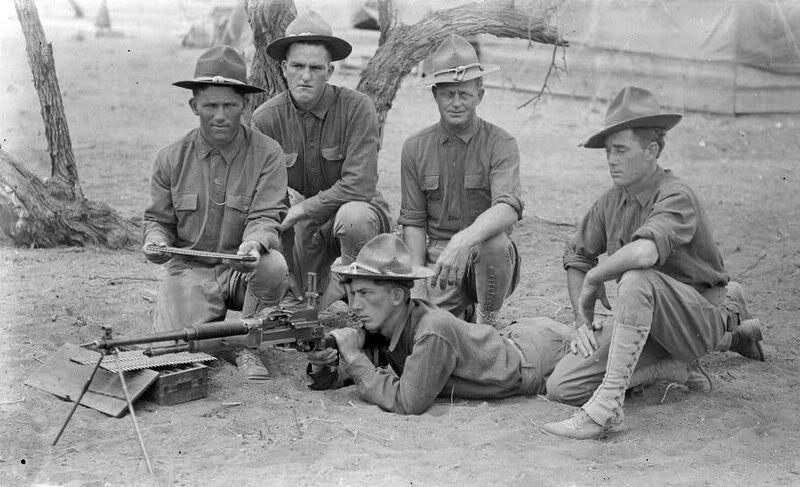
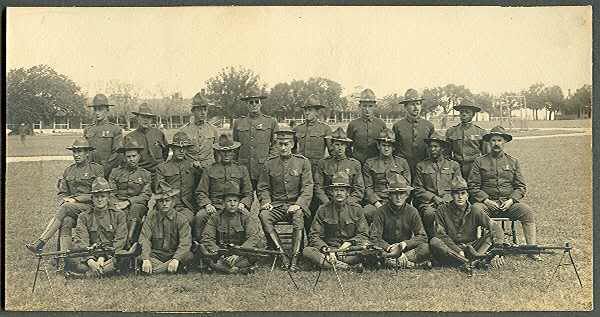
This gas-operated, air-cooled firearm weighed approximately 12 kg (27 lb) and had an effective range of . Initial versions utilized a 30-round feed strip, while subsequent models supported either strip or belt feeding. U.S. variants incorporated a bipod for stability, whereas others featured a lightweight tripod mounted beneath the gun, offering greater maneuverability compared to the heavier tripods common at that time.
Manufacture
Production commenced at Hotchkiss’s facility in Saint-Denis, near Paris. In 1914, facing the German military threat, French authorities relocated this factory to Lyon. The following year, the British government invited Hotchkiss to open a plant in Coventry, which ultimately produced over 40,000 units of the M1909 by the end of World War I.
In the United States, production was handled by Springfield Armory and Colt's Manufacturing Company, resulting in 670 units. Although this output was limited compared to later twentieth-century production runs, it represented a notable quantity for the contemporary United States Army. The M1909 supplanted manually operated .30-06 Gatling guns within U.S. arsenals.
Service
The Hotchkiss M1909 (Mle 1909), chambered for the 8 mm Lebel cartridge, was officially adopted by France in 1909 but was not distributed widely as an infantry weapon. Approximately 700 U.S.-manufactured units saw use in defensive roles within Verdun fortifications, on select fighter aircraft, and installed in British Mark V* tanks.
A British variant firing the .303 cartridge was produced in Coventry under the name "Hotchkiss Mark I," primarily issued to cavalry units. The MkI* version replaced the wooden stock with a pistol grip and became extensively employed in British tank crews during World War I.
The United States designated it as the "Benét–Mercié Machine Rifle, Caliber .30 U. S. Model of 1909," chambered for the .30-06 round. Other nations using this weapon included Belgium, Sweden, and Mexico. Both France and Britain maintained deployment of the M1909 through both World Wars. It was also utilized by units such as the Australian Light Horse, New Zealand Mounted Rifles Brigade, and Imperial Camel Corps during the Sinai and Palestine Campaign (1915–17).
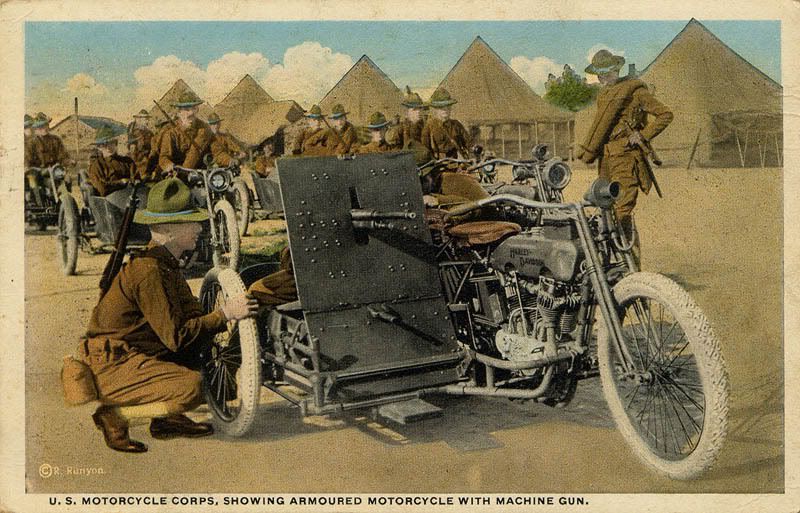
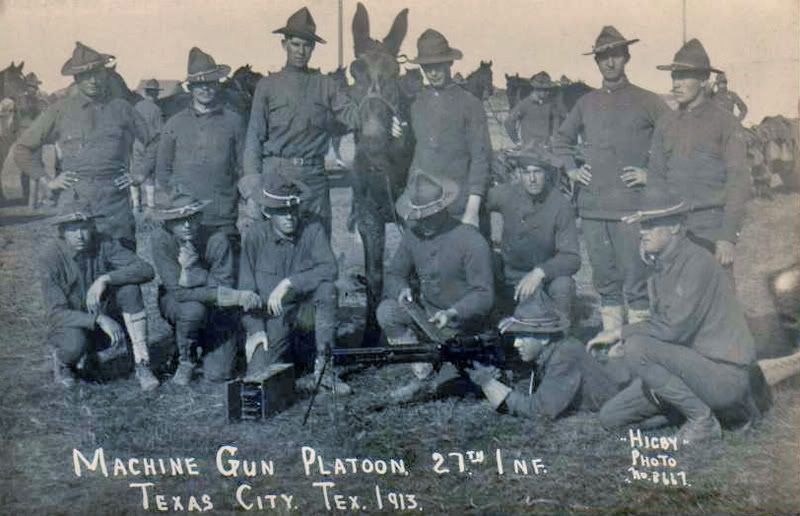
U.S. forces employed the Benét–Mercié in several engagements including the 1912 Battle of Masaya, the Haitian Campaign of 1915, the 1916 Battles of Guayacanas and Columbus—where four guns discharged 20,000 rounds—and during the Pancho Villa Expedition (1916–17). Early use on the Western Front revealed frequent failures of firing pins and extractors; combined with challenges replacing parts during nighttime operations, this led to its unflattering nickname "daylight gun." Major Julian Hatcher attributed most malfunctions to insufficient training; improvements made during subsequent training in the Villa Expedition enhanced operational reliability.
During that campaign, the M1909 was fitted with the Model 1908 Warner & Swasey Musket Sight to improve accuracy at extended ranges. Although U.S. production ended prior to World War I—limiting quantities—the weapon remained in service with the U.S. Navy throughout this period.
Users
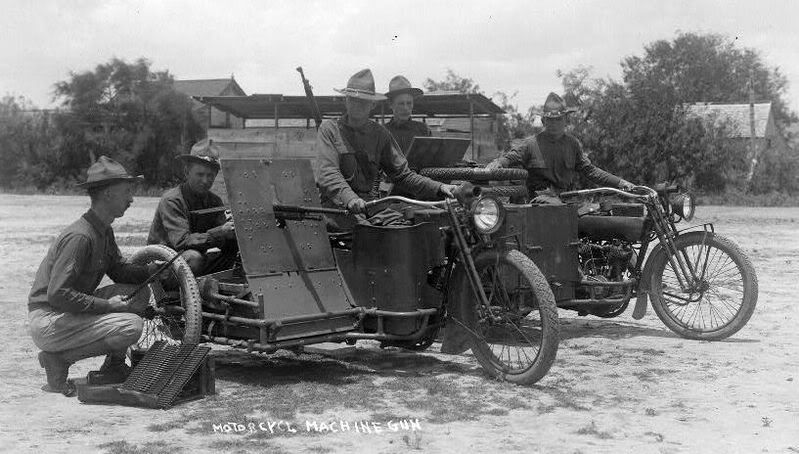
- Employed by the Irish National Army within armored vehicles during the Irish Civil War
- Utilized by forces of the Second Spanish Republic
- Additional operators and deployments include various military units (details unspecified)
See also
- Light machine gun
- List of individual weapons of the U.S. Armed Forces
- Huot automatic rifle
- Chauchat – French light machine gun also adopted by the U.S. Army
- Hotchkiss M1922 machine gun
Further reading
External links
- Photographs from the Museum of the Soldier, Portland, Indiana.
- Animated demonstration of the Hotchkiss portative .303 machine gun.
- (technical diagrams)


- Archive of early U.S. Army photographs: