IBM System/32
| Company type | Computer system |
|---|---|
| Industry | Information technology |
| Founded | January 7, 1975 |
| Defunct | October 17, 1984 |
| Headquarters | United States |
| Products | Midrange computer system (integrated display, disk storage, printer, database reporting software) |
The IBM System/32 (model 5320), launched in January 1975, was a midrange computer system that combined an integrated display, disk storage, printer, and database reporting software. Designed for small to medium-sized enterprises, it mainly catered to accounting tasks utilizing the RPG II programming language.
Overview
As a 16-bit single-user machine, the System/32 followed the IBM System/3 model 6 within IBM’s midrange product lineup. IBM marketed it as "the first system to integrate hardware with comprehensive application software." It was characterized as "a compact computer ideal for users with minimal or no programming background." Within just over three years, the System/32 outpaced the System/3 to become IBM’s most widely installed computer model.
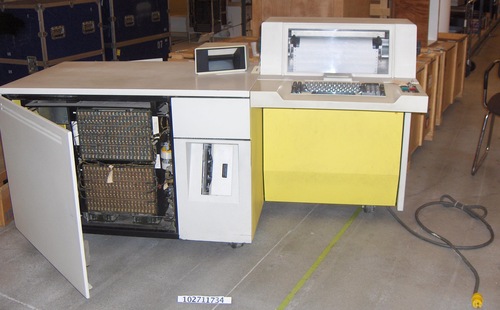
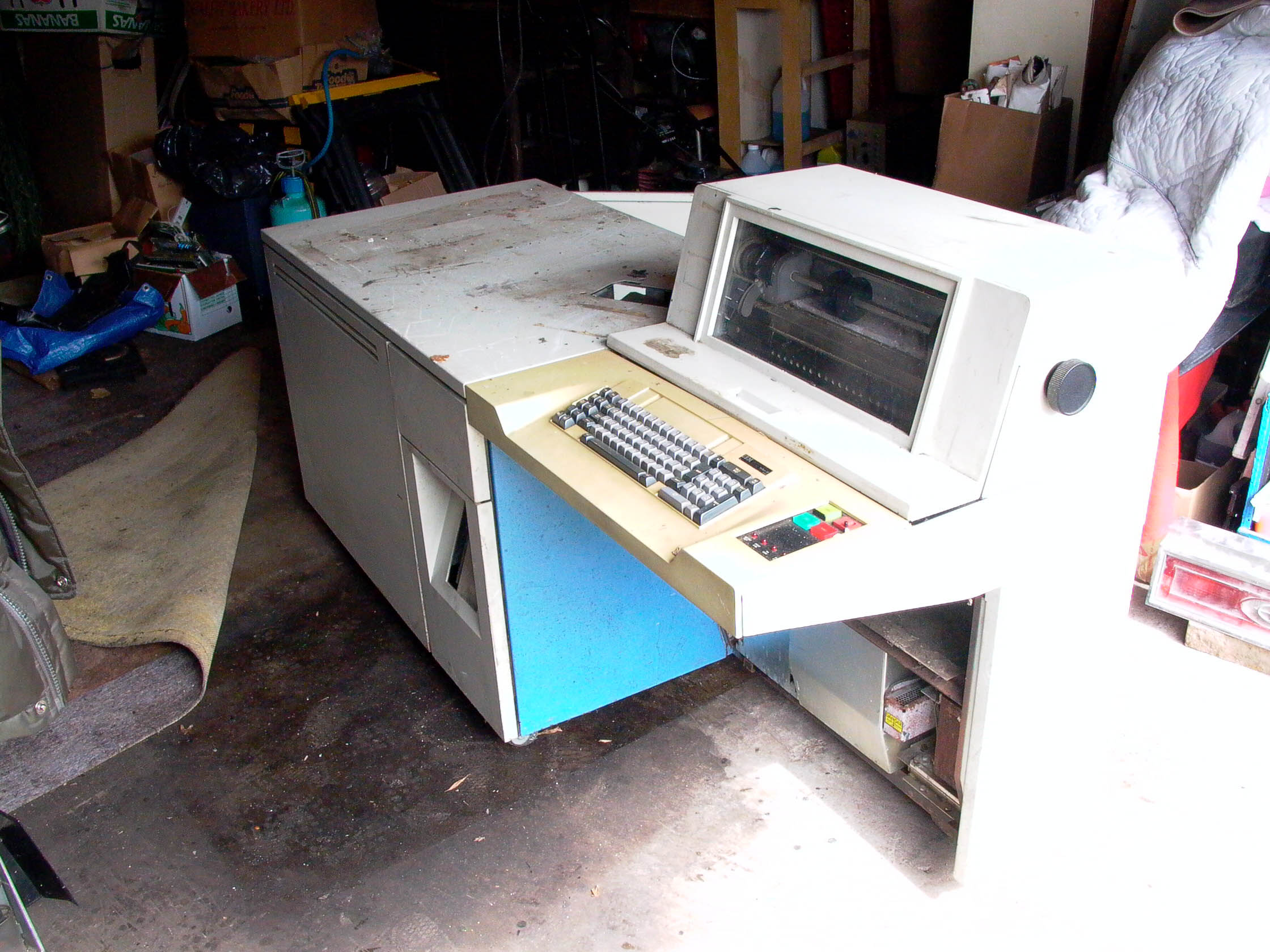
Its design resembled a sizable office desk featuring a small display capable of showing six lines by forty characters. This appearance earned it the nickname "Bionic Desk," inspired by the television series The Six Million Dollar Man. The system included an integrated line printer positioned facing the operator, able to print various outputs such as reports, memos, billing documents, and address labels.
Introduced on January 7, 1975, and discontinued on October 17, 1984, the System/32 allowed for a smooth transition to the IBM System/34 through source code compatibility that required only recompilation.
Processor
At its core, the System/32 housed a 16-bit processor known as the Control Storage Processor (CSP) with a cycle time of 200 nanoseconds. Unlike the purely hardwired processor used in the System/3, this system implemented the System/3 instruction set via microcode. Its vertical microcode architecture employed 16-bit microinstructions encompassing 19 opcodes, enabling roughly 70 unique operations. An optional collection of Scientific Macroinstructions facilitated support for a Fortran compiler by incorporating floating point arithmetic directly within microcode. IBM engineers such as Glenn Henry and Frank Soltis have observed that the System/32’s microcode bore similarities to a RISC instruction set design.
Due to suboptimal performance when emulating System/3 instructions, IBM embedded essential components of the SCP operating system into microcode. Subsequent systems like the System/34 and System/36 improved upon this by employing dual processors: the CSP managed OS functions, I/O control, and floating point operations, while user applications executed on the Main Storage Processor (MSP), which ran the System/3 instruction set natively in hardware without microcode. This dual-processor strategy influenced microcode development in later models such as the System/38.
Memory/storage
The System/32 came equipped with options for 16 KB, 24 KB, or 32 KB of main memory, alongside either 4 KB or an optional 8 KB of control storage to accommodate the scientific instruction set.
Storage options included a single hard drive available in three sizes: 5 MB, 9 MB, or 13 MB.
Additionally, it featured an eight-inch floppy drive compatible with IBM’s 3740 family disks. Only one side of these 77-track floppies was utilized; each track contained 26 sectors of 128 bytes. An extended IBM formatting option allowed sectors of 512 bytes each, yielding just under one-third of a megabyte per diskette.
System/32 Operator
Data input was accomplished through a character display similar to that found on the IBM 3740 series. The System/32 was engineered with user-friendliness in mind, eliminating the need for a dedicated computer operator.
System Software
The primary software elements consisted of:
- SCP (System Control Program), serving as the System/32's operating system
- SEU (Source Entry Utility), the tool for programming editing
- DFU (Data File Utility), which functioned as a query and report creation utility
- OCL (Operations Control Language), the command-line interface system
- #LIBRARY, the repository designated for executable program storage
See also
External links
- A restoration initiative for the System/32
- Corestore Museum’s System/32 performing IMPL/IPL from disk video
- Detailed newsgroup discussion on System/32 and System/34 architecture