
IMAM Ro.26
| Industry | Aerospace |
|---|---|
| Founded | 1923 |
| Headquarters | Italy |
Template:Infobox aircraft The IMAM Ro.26, also known as the Romeo Ro.26, was a single-engine biplane trainer aircraft produced by the Italian manufacturer IMAM during the early 1930s. Only a single unit was ever constructed.
Development
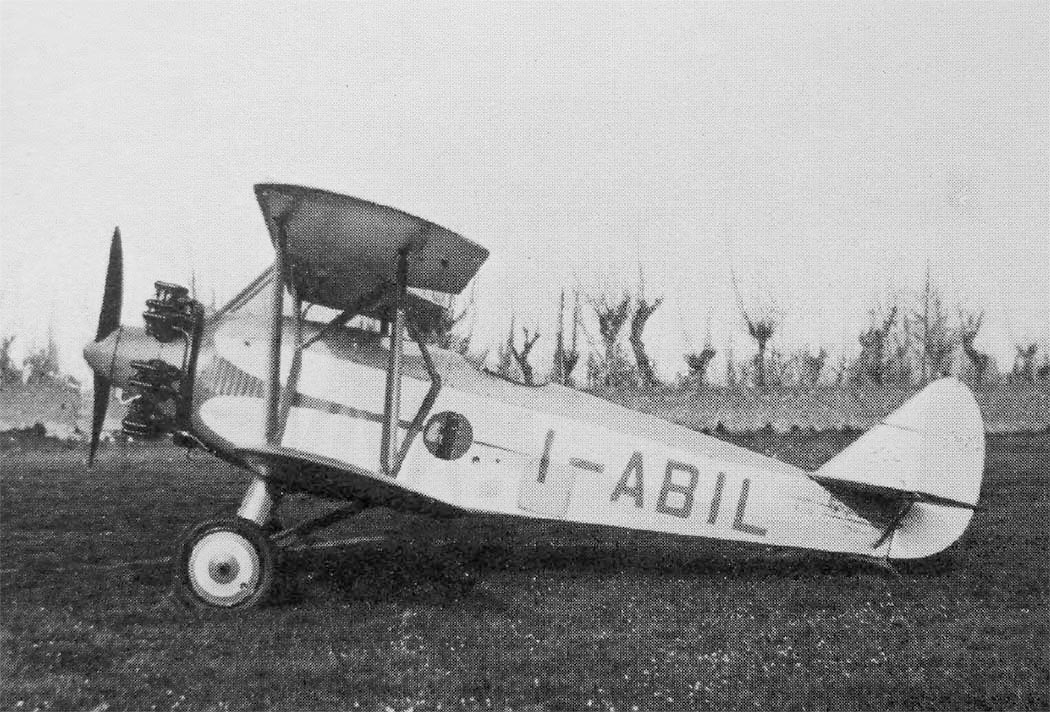
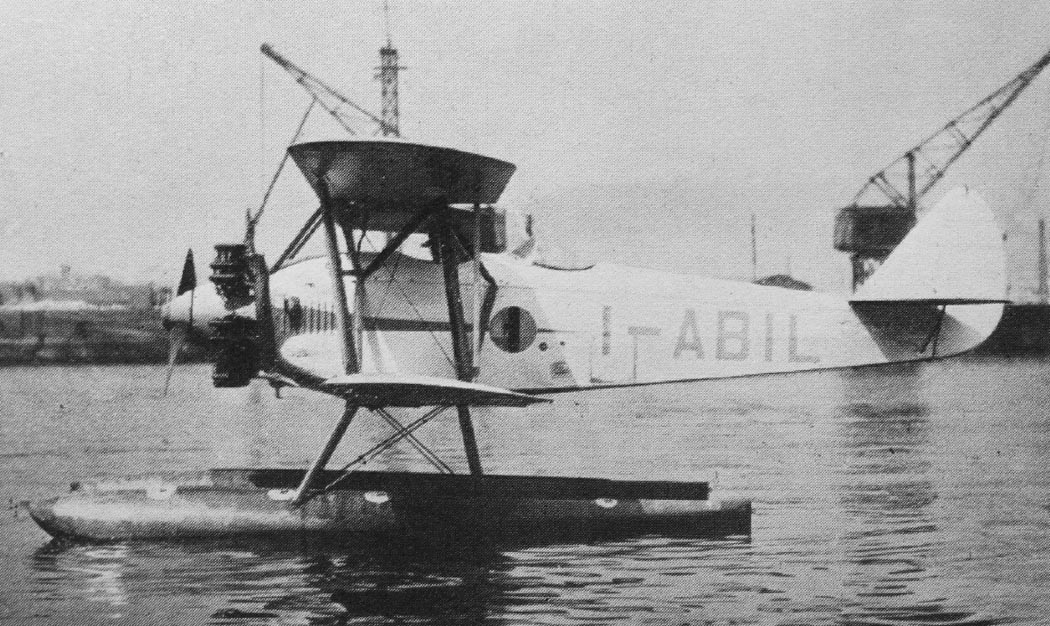
In early 1932, the Italian firm SA Industrie Meccaniche e Aeronautiche Meridurali (IMAM) developed the Ro.26, a biplane designed for fundamental pilot instruction, conceived by aeronautical engineer Giovanni Galasso.[1] The aircraft was equipped with a seven-cylinder 215 horsepower (160 kW) Armstrong Siddeley Lynx radial engine, which was produced under license by Alfa Romeo and named the Lince.[1] IMAM aimed to offer this model for basic flight training and participation in aerobatic contests.[1] Furthermore, the Ro.26's design permitted conversion into a floatplane variant, known as the Ro.26I or Ro.26 Idro ("Hydro"), by substituting the wheeled undercarriage with floats to facilitate seaplane pilot training. The prototype, bearing the registration I-ABIL, completed its maiden flight in 1932.[1]
Design
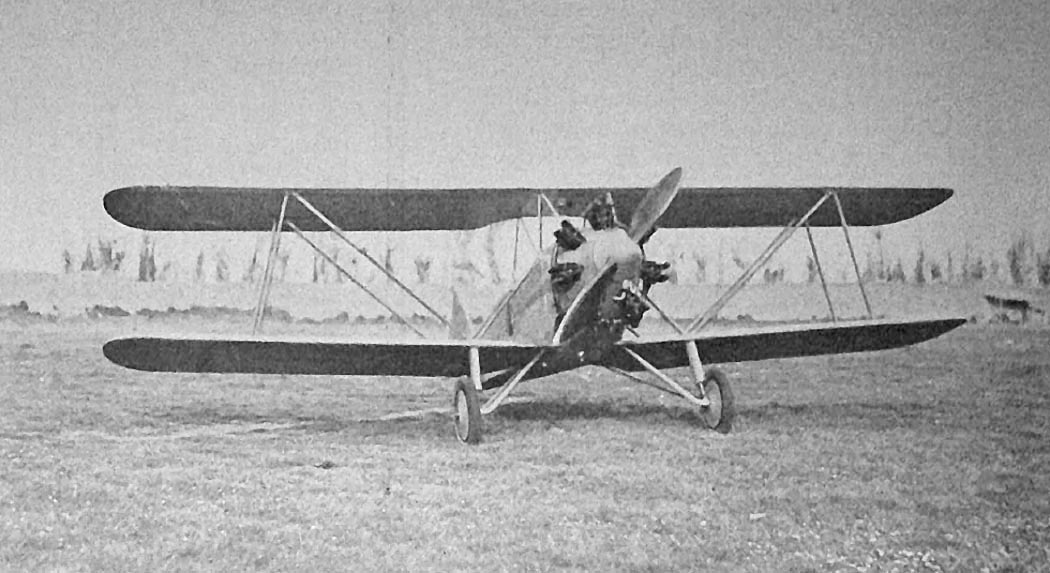
The Ro.26 featured a biplane configuration with wings of equal span exhibiting a slight dihedral angle.[2] Both the wing structure and tail assembly were constructed entirely from wood and covered with fabric. The fuselage consisted of an all-metal framework made from autogenously welded steel tubing.[2]
Its fixed landing gear employed a wide-track arrangement with rear tricycle wheels equipped with oil-elastic shock absorbers. This landing gear could be replaced by twin floats to convert the aircraft into a seaplane.[2] The open cockpits were arranged in tandem, with the instructor seated in the forward cockpit, which was accessible through a door located on the right side of the fuselage. The student pilot occupying the rear cockpit had the capability to connect or disconnect flight controls during flight at will.[2]
Power came from an Alfa Romeo Lynx seven-cylinder air-cooled radial engine delivering 215 horsepower (160 kW), which drove a two-bladed wooden propeller with a helical twist and a diameter of 2.180 metres (7 ft 1.8 in).[2]
Operational history
In early 1934, the Regia Aeronautica (Italian Royal Air Force) conducted evaluations of the Ro.26 prototype designated I-ABIL. Despite demonstrating favorable flying qualities, the military ultimately chose not to proceed with procurement. Consequently, IMAM discontinued any intentions for mass production and did not manufacture further units.
Variants
- Ro.26
- A biplane designed as a fundamental trainer, equipped with a 215 hp (160 kW) Alfa Romeo Lynx seven-cylinder radial engine.
- Ro.26I
This variant was adapted as a floatplane, achieving a top speed of 205 kilometres per hour (127 mph) and a stall speed of 82 kilometres per hour (51 mph). Its climb performance included reaching 1,000 m (3,300 ft) in 3 minutes 20 seconds, 2,000 m (6,600 ft) in 7 minutes, 3,000 m (9,800 ft) in 13 minutes, 4,000 m (13,000 ft) in 21 minutes 30 seconds, and 5,000 m (16,000 ft) within 34 minutes. The "I" suffix indicated Idrovolanti ("seaplane").
Operators
Specifications (Ro.26)
Notes
Bibliography
- Jotti da Badia Polesine, Annuario dell'Aeronautica Italiana, Libreria Aeronautica, Milan, 1934.
- Luigi Mancini (ed.), Grande Enciclopedia Aeronautica, Edizioni Aeronautica, Milan, 1936.
- I.M.A.M. Ro.26 at airwar.ru (accessed August 6, 2019).
External links
- Side profile of Ro-26 I-ABIL at airwar.ru
- Frontal view of Ro-26 I-ABIL at airwar.ru
- Side perspective of Ro.26 I-ABIL fitted with floats as Ro-26I at airwar.ru
Template:IMAM aircraft Lua error in mw.title.lua at line 359: bad argument #2 to 'title.new' (unrecognized namespace name 'Portal').