
Prime Computer
| Company type | Public |
|---|---|
| Industry | Computer hardware, software |
| Founded | 1972 |
| Founder | Robert Baron, Sidney Halligan, James Campbell, Joseph Cashen, Robert Berkowitz, William Poduska, John Carter |
| Defunct | 1992 |
| Fate | Rebranded as Computervision; assets sold off |
| Headquarters | Natick , United States |
Area served | Worldwide |
Key people | Robert Baron (president), William Poduska (VP Software Engineering), Joe M. Henson (president) |
| Products | Minicomputers (Prime 200, 100, 300, 400, 450, 550, 650, 750, 150, 250, 850, 2250, 9950, 9955, EXL-316, EXL-7000), PRIMOS OS, MEDUSA CAD software |
Number of employees | 12,386 (peak), reduced to 5,900 by 1991 |
| Parent | J.H. Whitney & Company (post-LBO) |
Prime Computer, Inc. was a manufacturer of minicomputers located in Natick, Massachusetts, operating from 1972 until 1992. The surge in personal computer adoption and the subsequent decline of the minicomputer sector caused Prime to exit the market in the early 1990s. By 2010, the PRIME and PRIMOS trademarks were officially discontinued.
The company’s branding occasionally featured stylized spellings such as "PR1ME" and "PR1MOS" in its logo designs.
Founders
Prime was established by seven entrepreneurs, many of whom had experience working on MIT's Multics project:
- Robert Baron (president)
- Sidney Halligan (VP Sales)
- James Campbell (Director of Marketing)
- Joseph Cashen (VP Hardware Engineering)
- Robert Berkowitz (VP Manufacturing)
- William Poduska (VP Software Engineering)
- John Carter (Director of Human Resources)
Initially, the company adopted the slogan "Software First." William Poduska, a pivotal founder and executive, departed in 1981 to found Apollo Computer. Following a short interim presidency by Kenneth G. Fisher, Joe M. Henson, a veteran IBM executive with 27 years’ experience, assumed leadership.
Minicomputer products
Prime’s early offerings consisted of clones of Honeywell’s DDP 316 and 516 minicomputers, positioning themselves against competitors like Digital Equipment Corporation, Data General, and Hewlett-Packard. By 1975, time-sharing systems represented Prime’s dominant market segment, with OEM sales contributing 25% of revenue and international customers accounting for 42%.
- 1972: Prime 200
This initial model was similar to the 16-bit DDP 516 and operated an OS named DOS (also known as PRIMOS 2).
- 1973: Prime 100
A streamlined version of the Prime 200 lacking memory parity and floating-point capabilities.
- 1974: Prime 300
Equipped with main memory ranging from 32 KB to 512 KB and disk storage up to 6 MB, it ran DOSVM (PRIMOS 3). It ranked among the earliest minicomputers to support virtual memory through microcode for up to 32 simultaneous users. Noteworthy deployments included Aston University in the UK and the Medical University of Hannover in Germany.
- 1976: Prime 400
Delivering performance at approximately 0.5 MIPS with up to 8 MB RAM and 160 MB disk capacity, it operated PRIMOS 4. This system introduced a segmented virtual memory design akin to that used by Multics.
- 1979: Prime 450, 550, 650, 750
The Prime 550 enhanced throughput to about 0.7 MIPS with memory up to 2 MB and disk storage at 500 MB. The Prime 750 marked a major advancement running at roughly 1.0 MIPS with memory between 2–8 MB and disk capacity reaching 1.2 GB. It competed with DEC’s VAX-11/780 and was among the first generation of 32-bit superminicomputers. Significant installations included RPI, Rutherford Appleton Laboratory, Leeds University, among others. Networking solutions such as PRIMENET and RINGNET were also launched.
- 1980–1981: Prime released models including the Prime 150, Prime 250, and the dual-processor Prime 850.
Additionally, Prime offered MEDUSA CAD software solutions.
- 1982–1985: Advanced systems such as the Prime 2250 ("Rabbit"), the superminicomputer Prime 9950, and the high-performance Prime 9955 operating at approximately 4.0 MIPS with up to 16 MB RAM and a maximum disk size of about 2.7 GB were introduced. Several units were deployed across UK universities including Salford, UMIST, and Nottingham.
- 1986–1990: The product lineup expanded further with models ranging from the Prime 2350 through to the Prime 6650.
Responding to evolving market demands, by 1987 Prime launched Unix-based EXL-316 systems powered by Intel’s 80386 processors, followed by the EXL-7000 Unix series in 1990.
Financially, Prime reached its zenith during the late 1980s; it was ranked #334 on the Fortune 500 list in 1988 and stood as the sixth largest minicomputer vendor in 1985 with estimated revenues around $564 million. The company’s strategy heavily focused on servicing the U.S. banking industry where its Info database software captured substantial market share.
By late 1989, Surrey University maintained Europe’s largest installation of Prime systems running various versions of PRIMOS.
CAD/CAM Business
Prime was instrumental in the creation of Ford’s proprietary computer-aided design (CAD) platform, the Product Design Graphics System (PDGS), which facilitated automotive body design and finite element analysis using NASTRAN. During the 1980s, PDGS represented the largest integrated CAD network worldwide, connecting Ford’s operations across the United States, Japan (through Mazda), Germany, the United Kingdom, and Australia. The team based at Ford’s Dearborn facility pioneered parametric design methodologies that eventually evolved into the PRIMEDesign system.
Prime secured the marketing and development rights for the MEDUSA CAD software, initially developed by Cambridge Interactive Systems (CIS) in England. In 1982, Prime assembled a dedicated development group to enhance MEDUSA, releasing upgraded versions under the Prime MEDUSA brand that incorporated support for SunOS, shaded rendering, and three-dimensional visualization. Concurrently, Prime embarked on creating its own CAD-CAM solution named PRIMEDesign, intended to rival Computervision’s market-leading CADDS4. This system operated on MIPS Technologies’ RISC processors and utilized Silicon Graphics’ graphics hardware, implemented on Prime’s PCXL 5500 workstation built around SGI’s IRIS 4D architecture.
In 1985, Sam Geisberg departed from Computervision to establish Parametric Technology Corporation and develop ProEngineer, a parametric CAD application. Meanwhile, Computervision had acquired Cambridge Interactive Systems in 1983; however, Prime continued independently advancing its iteration of MEDUSA.
Subsequently, Prime acquired Computervision with Vladimir Geisberg appointed as vice president of CAD to oversee the integration of Prime’s and Computervision’s MEDUSA versions and to launch Prime Design. Despite its advanced technology, Prime Design failed to meet practical engineering needs and was ultimately discontinued.
Decline and end
By the late 1980s, Prime Computer experienced a significant erosion of market share as clients transitioned toward more affordable computing solutions amid the decline of the minicomputer sector. The company struggled to keep pace with escalating performance requirements; its products no longer fell under US export restrictions due to their inadequate capabilities.
In 1988, financier Bennett S. LeBow attempted a hostile acquisition of Prime through his smaller firm MAI Basic Four. To fend off this bid, Prime’s leadership orchestrated a $1.3 billion leveraged buyout led by J.H. Whitney & Company acting as a "white knight." Nevertheless, financial instability within the holding entity compounded Prime’s difficulties during an increasingly challenging market environment.
Prime’s revenue decreased from $1.6 billion in 1988 to $1.2 billion by 1991, with computer sales plunging over 50% from $377 million in 1989 to $170 million in 1991. By 1992, new Prime Computers were no longer available for sale, adversely affecting its service division—a crucial income stream. Workforce reductions escalated from an initially planned 1,200 layoffs in 1989 to more than 6,000 by 1991, reducing staff numbers from 12,386 to 5,900.
Following closures of its design and manufacturing divisions, Prime’s primary remaining asset was its Computervision subsidiary—an early innovator in CAD/CAM acquired through a hostile takeover in 1988. The company rebranded itself as Computervision and divested its declining Prime Information unit to VMark Software Inc. in 1992.
In 1998, Parametric Technology Corporation—founded by a former Prime employee in 1985—acquired Computervision, effectively closing the final chapter on Prime’s business history.
Operating system
The company's operating system, PRIMOS, was originally created mainly using Fortran IV alongside some assembly language. Subsequently, the Kernel integrated PL/P—a streamlined version of PL/I developed internally by Prime—and Modula-2. New utilities for PRIMOS were programmed in SP/L, a language closely related to PL/P.
Significantly, the creators of VisiCalc, recognized as the first spreadsheet software for personal computers such as the Apple II, developed their editing, assembling, and linking tools on a Prime minicomputer utilizing Prime’s variant of PL/I.
Phantom, CPL and ED
"Phantoms" referred to background tasks launched via the PHANTOM command that operated without user intervention. Traditional batch processing jobs could be scheduled using the JOB command.
CPL, standing for PRIMOS Command Processing Language, functioned as the scripting environment or shell language within the system.
The PRIMOS text editor ED was a line-based editor capable of recording and replaying sequences of commands across multiple files. Additionally, a full-screen editor, Emacs, was also available on the platform.
Prime 300 specification
- Microprogrammed 16-bit CPU equipped with floating-point processing hardware, error detection mechanisms, and features ensuring system integrity.
- 128 KB MOS main memory with an access speed of 600 nanoseconds.
- Storage included a 6 MB cartridge disk alongside a character printer capable of 165 characters per second.
- System software encompassed a disk operating system and supported programming languages such as FORTRAN, BASIC, and assembler.
- The system accommodated up to 31 simultaneous users and was priced near US$165,000.
Advent Online Knowledge
Advent Online Knowledge, Inc., headquartered in Schaumburg, Illinois, developed applications specifically designed for Prime computer systems.
Marc Software
Marc Software International, Inc., based in Palo Alto, California, produced WordMARC, a word processing program tailored for Prime environments.
Computer Techniques (Queo)
Although Prime’s PRIMOS supported compilers and interpreters for COBOL, FORTRAN, BASIC, RPG, along with two assemblers, Queo offered a more sophisticated procedural language. It was more concise than COBOL while providing enhanced functionality. This language was developed by Computer Techniques, Inc., located in Olyphant, Pennsylvania, and eventually adapted for use on personal computers.
Office Automation System
Prime acquired the Office Automation System (OAS) from ACS America Inc., a now-defunct software vendor based in New York City. OAS participated in the UK Department of Trade and Industry’s Office Automation Pilot but did not secure the contract.
The OAS suite included electronic mail and word processing capabilities. Initially, email functionality was confined to a single minicomputer; later iterations expanded support to multiple Prime systems networked together with a unified global directory. Word processing operated on basic terminals such as the PT25, PT45, PST100, or the somewhat advanced PT65 terminal that downloaded its software from the host minicomputer during startup. The PT65 enabled users to work on one page at a time with periodic saves back to the minicomputer. This approach mirrored Wang Laboratories’ "intelligent workstation" concept but achieved faster performance by using RS232C cabling instead of coaxial connections. Despite this advantage, Prime’s word processing quality was inferior to competitors’, and the PT65 experienced software faults that occasionally corrupted documents.
OAS also incorporated a bilingual language lookup tool marketed as a form of machine translation.
To overcome limitations inherent in its downloadable word processing workstation, Prime collaborated with Convergent Technologies to introduce the AWS as the "Prime Producer 100" (released mid-1983) and subsequently launched the modular NGEN system as the "Prime Producer 200" (introduced in 1984). Both systems delivered superior document-centric word processing compared to Prime’s original product.
In the United Kingdom, an active OAS User Group existed whose input helped shape product enhancements. Early adopters included organizations such as the London Docklands Development Corporation and Oxford Polytechnic (now Oxford Brookes University).
Prime Information
The origins of both the Pick environment and Prime Information trace back to the Generalized Information Retrieval Language System (GIRLS), which was created by Richard Pick for the U.S. Department of Defense.
In 1979, Devcom, a reseller of Microdata products, developed a Pick-style database system named INFORMATION using FORTRAN and assembler for Prime Computer's 50-series. This system utilized INFO/BASIC, a variation of Dartmouth BASIC, to support database applications. Eventually, Prime Computer acquired this product and rebranded it as Prime INFORMATION.
Distinct from the complete Pick operating system, Prime Information functioned as a 4GL platform running on Prime’s PRIMOS OS. It facilitated swift 4GL development centered on relational or near-relational databases. Following several transitions and acquisitions, Prime Information was incorporated into the now-defunct Rocket U2 software suite.
Prime Information Connection
In approximately 1984, Prime launched Prime Information Connection, which integrated word processing capabilities into Prime Information. This development resulted in two office suites designed to challenge Wang Laboratories within a highly competitive market.
CAD/CAM
Prime entered the CAD sector through a strategic alliance with Ford. Ford was looking for a network-enabled alternative to its existing standalone computers from Control Data Corporation (CDC).
The Prime 2250 model, nicknamed "Rabbit," offered CDC-like performance combined with network connectivity in a more compact form factor. The PRIMOS operating system provided consistent functionality across all Prime hardware, ranging from the 2250 up to the larger 750 servers. Ford’s Data Collector facilities housed multiple 750-class machines equipped with CDC drives, all interconnected via Primenet (Token Ring) networks that linked every CAD workstation.
Ford expanded its Product Data Generation System (PDGS) deployment to include suppliers and contractors throughout the northern Midwest, broadening Prime’s footprint in the CAD marketplace.
Leveraging this groundwork, Prime enhanced its CAD expertise and product range with the Medusa line. The acquisition of ComputerVision further solidified Prime’s standing in the CAD/CAM arena.
Prime consolidated Medusa versions 5 and CV Medusa 7 into Medusa version 12 and acquired Calma CAD systems from GE, significantly boosting its competitiveness in CAD/CAM solutions.
Electronic messaging
The electronic messaging system was developed on relay.prime.com, which served as the central hub for routing global electronic mail traffic for Prime Computer. PDN Mail, created by Robert Ullmann, employed an encoding header field that was subsequently formalized in a Request for Comments. Before the advent of MIME, PDN Mail was also adopted by Microsoft Corporation.
Prior to MIME’s introduction, PDN Mail facilitated software updates and file attachments across different systems. In August 1993, Robert Ullmann, David Robinson, and Al Costanzo authored RFC 1505, which documented the Encoding Header Field used by PDN Mail; this RFC was published under the editorship of Jon Postel.
Marketing
In 1980, Prime Computer initiated a distinctive advertising campaign that starred actors Tom Baker and Lalla Ward from the television series Doctor Who. This campaign was crafted by Australian artist Rone Waugh. These commercials are featured on the DVD release of the 1979 serial Destiny of the Daleks, reflecting Prime's deliberate marketing approach aimed at boosting brand visibility.
See also
External links
- Overview of Prime Computers' History
- The Fate of Prime Computer by David Mandel; archived snapshot from September 27, 2007
- Malcolm Hoar's Prime Computer Corner, which includes the Comp.Sys.Prime FAQ
- Marketing Materials for Prime 300 circa 1975
- Overview of ICF Prime computers
Photos
- Images of various Prime computer models
- Rhode Island Computer Museum: 2450, 2850, 5340, and 9650
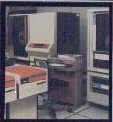
- Photograph of a Prime 750
- Articles with short description
- 1972 establishments in Massachusetts
- 1998 disestablishments in Massachusetts
- 1998 mergers and acquisitions
- American companies established in 1972
- American companies disestablished in 1998
- Computer-aided design software
- Computer companies established in 1972
- Computer companies disestablished in 1998
- Defunct computer companies based in Massachusetts
- Defunct computer companies of the United States
- Defunct computer hardware companies
- Defunct computer systems companies
- Defunct software companies of the United States
- Minicomputers
- Software companies based in Massachusetts
- Software companies established in 1972
- Software companies disestablished in 1998
- 5
- Companies of the United States by year of establishment