
Alfa Romeo
| File:Alfa Romeo logo.png | |
| Company type | Subsidiary |
|---|---|
| Industry | Automotive |
| Founded | 24 June 1910 (originally as A.L.F.A.) Milan, Lombardy, Kingdom of Italy |
| Founders |
|
| Headquarters | , |
Area served | Global (excluding India) |
Key people | Santo Ficili (CEO) |
| Products | Cars[2] |
Production output | 69,600 units (2023) |
| Brands | Quadrifoglio |
| Parent | Stellantis Europe |
| Website | alfaromeo.com |


Alfa Romeo Automobiles S.p.A. (Italian: [ˈalfa roˈmɛːo]) is an Italian automobile manufacturer renowned for its sports-focused cars, rich motorsport legacy, and distinctive styling.[3] Based in Turin, Italy, it operates as a subsidiary under Stellantis Europe and is one of the fourteen marques within the multinational automotive corporation Stellantis.
The company was founded on 24 June 1910 in Milan, originally named A.L.F.A.—an acronym for Anonima Lombarda Fabbrica Automobili[lower-alpha 1]—by Cavaliere Ugo Stella, who acquired the assets of the struggling Italian branch of French automaker Darracq, where he had previously served as investor and manager.[4] The firm’s inaugural model was the 24 HP, engineered by Giuseppe Merosi, which achieved commercial success and competed in the 1911 endurance race, the Targa Florio.
In August 1915, ownership transferred to Neapolitan entrepreneur and engineer Nicola Romeo, who significantly broadened the company's scope to include manufacturing heavy machinery and aircraft engines. By 1920, the brand was renamed Alfa Romeo, with the first vehicle to carry this new designation being the Torpedo 20–30 HP.
Throughout the 1920s, Alfa Romeo developed numerous successful racing and road vehicles, gaining prominence in key European motorsport competitions. Notably, it secured victory in the inaugural AIACR World Manufacturers' Championship during the 1925 Grand Prix season. Despite this success, financial difficulties arose, culminating in Nicola Romeo’s controversial exit in 1928 and subsequent state ownership by the Italian government in 1933.
Under management by the industrial entity Istituto per la Ricostruzione Industriale (IRI), Alfa Romeo initially continued crafting bespoke luxury automobiles but shifted focus after World War II’s economic challenges toward mass production of compact cars. The launch of the Giulietta family car series in 1954 marked this transition, alongside development of the influential Alfa Romeo Twin Cam engine, which remained in use until 1994.
Alfa Romeo gained a reputation for producing vehicles accessible to a broader market while retaining sporty aesthetics and performance characteristics typical of luxury brands. Despite its strong brand presence and substantial share within Europe’s high-performance segment, persistent losses during the 1970s led IRI to sell Alfa Romeo to the Fiat Group in 1986.[5]
Since then, Alfa Romeo has preserved its unique brand identity through multiple ownership transitions, including Fiat’s merger with American automaker Chrysler Group in 2014 forming Fiat Chrysler Automobiles (FCA), followed by FCA’s merger with French group PSA Group in 2021 to establish Stellantis.
The marque maintains a strong presence across various motorsports disciplines—such as Grand Prix motor racing, Formula One, sports car racing, touring car competitions, and rally events—which reinforces its sporty image. Of note, Enzo Ferrari founded the racing team Scuderia Ferrari in 1929 initially as an Alfa Romeo team before launching his own luxury sports car brand in 1939.
History
Name
The designation of the company merges its original title, "A.L.F.A." (standing for "Anonima Lombarda Fabbrica Automobili" or “Lombard Automobile Factory Corporation”), with the surname of industrialist Nicola Romeo, who assumed control in 1915.
Foundation and early years


The initial factory premises of A.L.F.A. were located on the original site of Società Anonima Italiana Darracq (SAID), which had been established in 1906 by the French car manufacturer Alexandre Darracq, together with Italian investors. Among these investors was Cavaliere Ugo Stella, a Milanese nobleman who became SAID’s chairman in 1909.[6] Although the company’s first base was intended to be in Naples, before construction began, Darracq decided late in 1906 that Milan was a more strategic location. Consequently, land was purchased in the Milan suburb of Portello, where a new factory spanning 6,700 square metres (8,000 sq yd) was built. By late 1909, sales of Italian Darracq automobiles were declining sharply, leading to the company's liquidation.[7] Ugo Stella and other Italian investors then established a new enterprise called A.L.F.A. (Anonima Lombarda Fabbrica Automobili), acquiring the assets of the dissolving Italian Darracq.[7]
The company's first automobile was the 1910 24 HP, designed by Giuseppe Merosi, who had been recruited in 1909 to develop models better suited to Italian consumers. Merosi subsequently engineered several new A.L.F.A. vehicles featuring more powerful engines, including the 40–60 HP. A.L.F.A. also entered motor racing; drivers Franchini and Ronzoni competed with two 24-hp cars in the 1911 Targa Florio. In 1914, an advanced Grand Prix machine—the GP1914—was developed, equipped with a four-cylinder engine featuring double overhead camshafts, four valves per cylinder, and twin ignition.[8] However, automobile production at A.L.F.A. was suspended for three years due to the outbreak of the First World War.
In August 1915, Neapolitan businessman Nicola Romeo took over management and transformed the factory into a producer of military equipment for Italy and its allies during wartime. The enlarged facility manufactured munitions, aircraft engines and parts, compressors, and generators derived from existing automotive engines. Post-war, Romeo reinvested his profits by acquiring locomotive and railway carriage factories in Saronno (Costruzioni Meccaniche di Saronno), Rome (Officine Meccaniche di Roma), and Naples (Officine Ferroviarie Meridionali), all incorporated into his ownership of A.L.F.A.
| Year | Cars | Industrial vehicles |
|---|---|---|
| 1934 | 699 | 0 |
| 1935 | 91 | 211 |
| 1936 | 20 | 671 |
| 1937 | 270 | 851 |
| 1938 | 542 | 729 |
| 1939 | 372 | 562 |
Though initially car manufacturing was not prioritized after the war, it recommenced in 1919 since components for completing 105 vehicles had remained at the factory since 1915.[6] In 1920, the company officially adopted the name Alfa Romeo; its first model bearing this badge was the Torpedo 20–30 HP.[10] That same year marked their first major victory when Giuseppe Campari won at Mugello Circuit, followed by a second-place finish at the Targa Florio with driver Enzo Ferrari. Giuseppe Merosi continued as chief designer while producing both reliable road cars and successful racers like the 40–60 HP and RL Targa Florio.
In 1923, Alfa Romeo enticed engineer Vittorio Jano away from Fiat, partly due to encouragement from young racing driver Enzo Ferrari. Jano succeeded Merosi as chief designer. His first creation for Alfa was the P2 Grand Prix car, which secured Alfa Romeo’s victory in the inaugural world championship for Grand Prix racing in 1925. For production vehicles, Jano developed a range of small to medium inline engines with four, six, or eight cylinders based on the P2 design. These engines featured lightweight alloys, hemispherical combustion chambers with centrally placed spark plugs, dual overhead camshafts per cylinder bank operating two rows of valves. Jano’s engineering proved both robust and high-performing.
Enzo Ferrari demonstrated greater aptitude as a team manager than as a driver; when Alfa’s factory racing team was privatized it became known as Scuderia Ferrari. After departing from Alfa Romeo, Ferrari founded his own marque. Legendary driver Tazio Nuvolari frequently competed for Alfa Romeo before World War II.

Nicola Romeo resigned in 1928. By 1933, Alfa Romeo faced financial difficulties and was effectively nationalized under government control. The company became a symbol of Mussolini’s Italy and produced bespoke luxury automobiles primarily bodied by firms such as Carrozzeria Touring or Pininfarina. This golden era culminated with models like the Alfa Romeo 2900B Type 35 race cars.
During World War II, Alfa’s factory—adapted to manufacture engines for aircraft such as the licensed Daimler-Benz-powered Macchi C.202 Folgore—was bombed heavily and faced challenges returning to profitability post-war. The focus shifted away from luxury vehicles toward smaller mass-market cars beginning with the introduction of the Giulietta series in 1954. This line included saloons (berline), coupes, and open two-seaters all powered by what became known as the Alfa overhead Twin Cam four-cylinder engine initially displacing 1300 cc. The engine was later enlarged to two liters and remained in production until 1995.
Post war

Following the resumption of motorsport competitions after World War II, Alfa Romeo established itself as the dominant force in Grand Prix racing. The advent of the new single-seater racing category (Formula One) provided an excellent platform for Alfa Romeo’s Tipo 158 Alfetta, which was derived from a pre-war voiturette model. Giuseppe Farina clinched the inaugural Formula One World Championship in 1950 driving the 158, and Juan Manuel Fangio secured Alfa Romeo’s second consecutive title in 1951.
In 1952, Alfa Romeo developed its initial front-wheel-drive compact vehicle under "Project 13–61". This design featured a transverse engine mounted at the front, a layout that would become standard in modern front-wheel-drive cars. A renewed effort in the late 1950s led to the conception of the Tipo 103, a smaller counterpart to the popular Alfa Romeo Giulia. However, due to economic challenges faced by post-war Italy, the Tipo 103 never reached production. Had it been manufactured, it would have predated the Mini as the pioneering "modern" front-wheel-drive compact car. During the mid-1950s, Alfa Romeo entered into a partnership with Brazil’s Matarazzo Group to establish Fabral (Fábrica Brasileira de Automóveis Alfa), aiming to produce the Alfa Romeo 2000 locally. Despite initial government approval, Matarazzo withdrew under pressure from Brazil’s President Juscelino Kubitschek, and production was taken over by the state-owned FNM company, which launched the car as the "FNM 2000" in 1960.[11]

Throughout the 1960s, Alfa Romeo focused on motorsport endeavors centered around production-based vehicles such as the GTA—an aluminium-bodied coupe designed by Bertone and equipped with a potent twin-plug engine. Notably, the GTA secured victory in the inaugural Sports Car Club of America's Trans-Am championship in 1966. The following decade saw Alfa Romeo prioritize prototype sports car racing with models like the Tipo 33, achieving early wins in 1971. The Tipo 33TT12 earned Alfa Romeo the World Championship for Makes title in 1975, while the Tipo 33SC12 claimed the World Championship for Sports Cars in 1977.[12][13]
As a state-owned enterprise, Alfa Romeo frequently encountered political influences. To aid in industrializing Italy’s economically lagging south, production of Alfa Romeo’s new compact car was assigned to a plant in Pomigliano d'Arco, located in Campania. The vehicle’s name, Alfa Sud (meaning Alfa South), reflected its manufacturing location. On 18 January 1968, a new company titled "Industria Napoletana Costruzioni Autoveicoli Alfa Romeo-Alfasud S.p.A." was established, with Alfa Romeo holding a 90% stake and government-controlled holding company Finmeccanica owning the remaining 10%.Cite error: The opening <ref> tag is malformed or has a bad name This facility was constructed amid social unrest following France’s 1968 protests and Italy’s Hot Autumn, yet it never fully operated as intended.[14] The workforce primarily consisted of individuals with construction experience rather than factory skills, contributing to persistent labor difficulties. Absenteeism at Pomigliano reached averages of 16.5 percent during the 1970s,[15] peaking at nearly 28 percent.[16]
By the decade’s end, Alfa Romeo faced renewed financial instability, operating at approximately sixty percent capacity by 1980.[14] Since ownership rested with Italy’s state-run Istituto per la Ricostruzione Industriale (IRI), arrangements were made wherein roughly one-quarter of employees’ wages were subsidized through unemployment benefits to permit factory shutdowns for two weeks every two months. A combination of an outdated product range, low efficiency, ongoing industrial disputes, and Italy’s high inflation resulted in sustained losses for Alfa Romeo.[14][17][16] Various initiatives were undertaken to stabilize finances, including an ultimately unsuccessful collaboration with Nissan through the joint venture, supported by then-president Ettore Massacesi and Prime Minister Francesco Cossiga. By 1986, IRI was incurring substantial losses—with Alfa Romeo having failed to turn a profit for over a decade[18]—prompting IRI president Romano Prodi to offer Alfa Romeo for sale. Finmeccanica had maintained ownership of Alfa Romeo since 1932 through its mechanical holdings division. Prodi initially approached fellow Italian automaker Fiat, which proposed forming a joint venture with Alfa.
Fiat acquisition
Fiat abandoned its initial proposal for a joint venture with Alfa Romeo after Ford submitted a bid to purchase a portion of Alfa Romeo, aiming to reorganize the company and gradually increase its ownership. Nevertheless, Fiat decided to present an offer to acquire Alfa Romeo entirely, including commitments to safeguard employment for Italian workers—terms that Ford declined to match. The fact that Fiat's acquisition would ensure Alfa Romeo remained under Italian ownership was also advantageous for all parties involved. The transaction was finalized in 1986, resulting in Alfa Romeo's merger with its longstanding competitor Lancia under the newly formed Fiat subsidiary Alfa Lancia Industriale S.p.A.[18][17] Back in 1981, Ettore Massacesi, then-President of Alfa Romeo, had declared that the company would never adopt Fiat engines—considered central to Alfa Romeo's identity—but expressed willingness to collaborate extensively in other areas.[19]

From the 1990s onward, Alfa Romeo models merged the brand’s hallmark innovative design and sporty character with the cost efficiencies of product standardization. Notable vehicles include a "GTA" edition of the 147 hatchback, the Giugiaro-styled Brera, and the high-performance exotic 8C Competizione, named after one of Alfa’s most celebrated pre-war racing cars—the 8C from the 1930s.
In 2005, Fiat regained full control of Maserati by repurchasing it from Ferrari. Subsequently, Fiat Group established a dedicated sports and luxury division combining Maserati and Alfa Romeo.[20] This division fostered strategic collaboration between the two marques, sharing engines, platforms, and potentially dealership networks.[21]
At the start of 2007, Fiat Auto S.p.A. underwent restructuring that resulted in the creation of four new automotive entities: Fiat Automobiles S.p.A., Alfa Romeo Automobiles S.p.A., Lancia Automobiles S.p.A., and Fiat Light Commercial Vehicles S.p.A. These companies became wholly owned subsidiaries of Fiat Group Automobiles S.p.A. (renamed FCA Italy S.p.A. from 2007).[22]

On 24 June 2010, Alfa Romeo marked its centenary anniversary.[23]
| Year | Units Produced |
|---|---|
| 1998 | 197,680 |
| 1999 | 208,336 |
| 2000 | 206,836 |
| 2001 | 213,638 |
| 2002 | 187,437 |
| 2003 | 182,469 |
| 2004 | 162,179 |
| 2005 | 130,815 |
| 2006 | 157,794 |
| 2007 | 151,898 |
| 2008 | 103,097 |
| 2009 | 103,687 |
| 2010 | 119,451 |
| 2011 | 130,535 |
| 2012 | 101,000[25] |
| 2013 | 74,000 |
| 2014 | 59,067 |
| 2015 | 57,351 |
| 2016 | 93,117[26] |
| 2017 | 150,722[26] |
| 2018 | 107,238 |
| 2019 | 72,657 |
| 2020 | 54,304 |
| 2021 | 44,115 |
| 2022 | 53,000 |
| 2023 | 69,600 |
Recent developments
Alfa Romeo has experienced a decline in sales figures. In 2010, the brand sold approximately 112,000 vehicles, falling well short of Fiat CEO Marchionne's global target of 300,000 units. For 2011, Alfa Romeo aimed to reach 170,000 sales, anticipating 100,000 Giulietta and 60,000 MiTo models; however, actual sales reached only 130,000 that year. The company's medium-term goal was to achieve 500,000 units by 2014, including an estimated 85,000 vehicles sold in the North American market. By 2017, Alfa Romeo increased its production by 62 percent, manufacturing a total of 150,722 cars across its three manufacturing plants.
On January 16, 2021, the merger between Fiat Chrysler Automobiles and Groupe PSA was finalized, resulting in the creation of Stellantis and the rebranding of the company as Stellantis Italy.
Despite the downturn in sales, Alfa Romeo's CEO Jean-Philippe Imparato announced plans in 2021 to introduce a new model annually from 2022 through 2026. This rollout would commence with the long-awaited Tonale and feature full electrification for all new models starting in 2027.
Return to North America

Alfa Romeo vehicles were first brought into the United States during the mid-1950s by importer Max Hoffman. At Hoffman's request, the Giulietta Spider—a convertible variant of the Giulietta—was developed. By 1961, Alfa Romeo began exporting cars to the US through its own dealership network.
The brand discontinued exports to the US market in 1995, with the Alfa Romeo 164 sedan being its final model sold there.
Following rumors and announcements by Fiat CEO Sergio Marchionne, Alfa Romeo re-entered the US market on May 5, 2006. Sales recommenced in October 2008 with the limited-edition 8C Competizione coupe, imported via Fiat’s American subsidiary Chrysler. In that same year, discussions took place between Alfa Romeo and Chrysler about manufacturing Alfa vehicles at some of Chrysler’s shuttered plants as part of corporate restructuring and cost reduction efforts. However, according to a November 2009 report by The Wall Street Journal, Chrysler phased out several Dodge and Jeep models while introducing Alfa Romeo vehicles alongside the new Fiat 500.
Key moments marking Alfa Romeo’s renewed North American presence included the launch of the more affordable two-seater 4C coupe in 2014. That year also saw Fiat Group Automobiles S.p.A. confirm a mutual termination of its agreement with Mazda Motor Corporation regarding a planned new Alfa Romeo Spider based on the Mazda MX-5 platform. Instead, this collaboration resulted in the launch of the Fiat 124 Spider convertible in 2015. Further strengthening its US comeback, Alfa Romeo unveiled the Giulia at the Los Angeles Auto Show in 2015. During Super Bowl LI in February 2017, Chrysler exclusively featured Alfa Romeo in three advertisements.
Currently, FCA US LLC serves as Alfa Romeo’s importer for the United States market, distributing models such as the Giulia, Stelvio, Tonale, and the exclusive 33 Stradale.
Leadership
- Nicola Romeo (1915–1928)
- Ugo Gobbato (1933–1945)
- Pasquale Gallo (1945–1948)
- Giuseppe Luraghi (1951–1974)
- Ermanno Guani (1974)
- Gaetano Cortesi (1974–1978)
- Ettore Massacesi (1978–1986)
- Danielle Bandiera (2002–2005)
- Antonio Baravalle (2005–2007)
- Sergio Cravero (2009–2010)
- Harald Wester (2010–2016)
- Reid Bigland (2016–2018)
- Timothy Kuniskis (2018–2021)
- Jean-Philippe Imparato (2021–2024)
- Santo Ficilli (2024–present)
Design and technology

Technological development
Throughout its history, Alfa Romeo has been a pioneer in incorporating advanced technologies. The company's signature double overhead camshaft engine debuted in the 1914 Grand Prix vehicle, with the first production road car featuring this engine type being the 6C 1500 Sport introduced in 1928.
In 1940, Alfa Romeo experimented with one of the earliest electronic fuel injection systems—the (Caproni-Fuscaldo)—on the Alfa Romeo 6C 2500 "Ala spessa" model during the Mille Miglia race. This setup included six electrically actuated injectors supplied by a semi-high pressure circulating fuel pump system.
For the North American market beginning in 1969, Alfa Romeo implemented mechanical fuel injection via the SPICA system (Società Pompe Iniezione Cassani & Affini, an Alfa Romeo subsidiary). Despite this change, engine output and performance remained consistent with carburetted models. The SPICA injection system was utilized until 1982, when it was replaced by Bosch’s electronic multi-point fuel injection on the 2.0-liter engines.
The introduction of mechanical variable valve timing occurred with the 1980 U.S. release of the Alfa Romeo Spider. From 1983 onward, all Spider variants incorporated electronic VVT technology.
The 105 series Giulia represented a technologically sophisticated vehicle, featuring innovations such as all-wheel disc brakes and a plastic radiator header tank. It also boasted one of the lowest drag coefficients within its category. This approach continued with subsequent models like the Alfetta 2000 and GTV, which were notable for characteristics including a balanced 50:50 weight distribution, standard alloy wheels, and a transaxle configuration.
More recent advancements include adopting a fully digital design process using CAD for developing the Alfa Romeo 164, as well as introducing an automated paddle-shift transmission system known as Selespeed in the 156. The 156 also holds distinction as the first passenger car worldwide to employ a Common rail diesel engine. Additionally, in 2009, Alfa Romeo launched the Multiair electro-hydraulic variable valve actuation technology on the MiTo. The Alfa Romeo Giulia further advanced technology integration by featuring brake-by-wire electrical braking systems starting in 2016.
Body design

Numerous renowned Italian design studios have been commissioned to craft both concept and production vehicle aesthetics for Alfa Romeo. These include:
- Bertone
- Giorgetto Giugiaro / Italdesign
- Pininfarina
- Zagato
- Centro Stile Alfa Romeo
Alfa Romeo's body construction methods have frequently served as a model for other automakers, making their design approaches notably influential. Below is a summary of key innovations and examples where other manufacturers adopted similar techniques:

- 1960s: Aerodynamics – The Giulia 116 series achieved an impressively low drag coefficient. During this period, Toyota notably aimed to develop a lineup of vehicles with comparable aerodynamic profiles.
- 1970s: Integrated bumpers – To comply with U.S. crash regulations, Alfa Romeo pioneered a technique that seamlessly incorporated bumpers into the vehicle’s overall bodywork, preserving the car’s design flow. The 1980s Alfa Romeo 75 exemplifies this approach, which was widely emulated by German and Japanese manufacturers.
- 1980s: Alfa Romeo 164 – This model marked a significant leap in design methodology, introducing full CAD/CAM integration within the production process and minimizing handcrafted elements. The styling cues from the 164 continue to influence contemporary Alfa Romeo models. Many automakers adopted concepts first introduced by the 164, including increased use of onboard computing systems.
- 1990s: The faux coupé style – The Alfa Romeo 156 and 147, despite being four-door cars, presented themselves with visual cues typical of two-door models by featuring prominent front door handles and discreet rear door-handle placements. Honda incorporated this design in its recent Civic hatchback, while a similar approach is visible in the Mazda RX-8 four-seat coupé and Renault Clio V.
- 2000s: Brera and 159 – Designed by Giorgetto Giugiaro, these models have significantly influenced sedan and coupé aesthetics, demonstrating how concept car designs can be effectively translated into production vehicles when CAD tools are utilized from the outset.
Concept cars
Alfa Romeo has produced several notable concept vehicles over the years:
- 1950s – The B.A.T. series
The Berlina Aerodinamica Tecnica prototypes were created by Bertone to explore whether aerodynamic streamlining and wind-tunnel-optimized designs could enhance performance on standard chassis while remaining appealing to consumers. The B.A.T. 5, 7, and 9 were all based on the Alfa 1900 Sprint platform. Later, the B.A.T. 11 utilized the chassis of the 8C Competizione.
- 1960s and 1970s – Evolution from the Tipo 33
The Tipo 33 race car, equipped with a high-revving two-liter V8 engine, inspired various concept cars throughout the ’60s and ’70s, with some leading to production models. Most debuted at the Geneva Motor Show. Highlights include:
- Gandini/Bertone Carabo (1968) – Marcello Gandini introduced design elements that would later appear in the Lamborghini Countach.
- Tipo 33.2 (1969) – Pininfarina designed this model based on concepts previously seen in Ferrari prototypes.
- Gandini/Bertone Montreal Concept (1967) – Unveiled at Expo Montreal in 1967, this Giulia-based prototype evolved into the production Alfa Romeo Montreal, powered by a variant of the Tipo 33’s V8 engine.
- Bertone/Giugiaro Navajo (1976) – Featuring an entirely fiberglass body, this car exemplified Giugiaro’s ‘Origami’ style characterized by flat surfaces.
- 1980s to present – Contemporary concepts
Generally, Alfa Romeo’s concept cars have transitioned into production models after adaptations for manufacturability and safety compliance. Examples such as the Zagato SZ, GTV and Spider, Brera, and 159 illustrate Alfa Romeo’s consistent dedication to integrating cutting-edge stylistic principles into their vehicles.
Original logo

The emblem of Alfa Romeo features two heraldic elements deeply connected to its native city, Milan: a red cross derived from the city's flag and the biscione, a large serpent with a child emerging from its mouth, symbolizing the Visconti family, who governed Milan during the 14th century.[27][28][29]
This emblem was initially created in 1910 by Romano Cattaneo, a young draftsman working in the technical department of A.L.F.A.[30]
Origin
In June 1910, following the transformation of Società Anonima Darracq into Anonima Lombarda Fabbrica Automobili, preparations were underway for the launch of its first vehicle, the 24 HP. The company's board requested chief engineer Giuseppe Merosi to design a badge for the radiator shell. Merosi consulted with his team, including Cattaneo, who drew inspiration from the coat of arms displayed on the gates of Castello Sforzesco to incorporate the biscione into the design.[30] Merosi appreciated this concept and collaborated with Cattaneo to produce an initial sketch. This design received approval from managing director Ugo Stella, after which Cattaneo was tasked with completing the final version.[30]
The original badge was circular, crafted from enamelled brass, and measured 65 mm (2.6 in) in diameter. It already featured all key elements present today: on the left side, a red cross on a white background representing Milan; on the right, a green biscione set against a light blue field. These were encircled by a blue ring containing the inscriptions "ALFA" at the top and "MILANO" at the bottom.[31] To honor the King of Italy, these words were separated by two figure-eight knots—known as Savoy knots in Italian—symbolizing the then-reigning House of Savoy. Initially, the lettering was made from solid brass but was changed to white enamel in 1913.[32] After Nicola Romeo acquired the company in 1918, "ALFA" was replaced with "ALFA-ROMEO."
In celebration of the Alfa Romeo P2's triumph in the first-ever World Manufacturers' Championship during the 1925 season, a silver laurel wreath was added around the badge. This feature remained, in various forms, until 1982.[28][33] The inclusion of this wreath increased the badge's diameter to 75 mm (3.0 in), though it was reduced again to 60 mm (2.4 in) in 1930.[31]
Post-war transformation
Following the dissolution of the monarchy and the establishment of the Italian Republic in 1946, the Savoy figure-eight knots were substituted with two flowing lines.[34] At the same time, the emblem underwent a comprehensive redesign and was scaled down to a diameter of 54 mm (2.1 in), a size that has remained constant to this day.[31] Crafted from stamped steel, this updated badge featured the classic components—the inscriptions, the cross, a newly reimagined biscione, and a slender laurel wreath—embossed in antique silver atop a uniform Alfa Red background, which replaced the previous blue, white, and light blue segments. This red-and-metal insignia was in use until 1950, when Alfa Romeo reverted to an enamelled and color-filled version; by 1960, the badge material transitioned from brass to plastic, maintaining the design with minimal alterations.[34]
In the early 1970s, construction of the brand-new Alfa Romeo Pomigliano d'Arco plant near Naples was finalized. When production of the Alfasud commenced there in 1972—marking Alfa Romeo’s first passenger car manufactured outside Milan—the badge on all models was altered by removing "Milano," the curved lines, and the hyphen between "Alfa" and "Romeo."[34] Simultaneously, the emblem received a redesign that notably featured a modernized biscione and updated type face.
A subtle update arrived in 1982, eliminating the laurel wreath and changing all lettering and chrome elements to gold. This version of the badge remained standard until 2015.[35]
2015 logo update
On 24 June 2015, coinciding with Alfa Romeo’s 105th anniversary, a refreshed logo was revealed during a press conference at the Alfa Romeo Museum, alongside the launch of the Alfa Romeo Giulia, as part of a broader brand revitalization strategy.[36] The redesign was executed by Robilant Associati, who had previously revamped various other Fiat Group logos such as those for Fiat Automobiles and Lancia.[37]
The color palette was streamlined from four hues to three: green representing the biscione, red for the cross, and dark blue encircling the ring. Additional modifications included adopting a new serif font and replacing the previous divided white and light blue background fields with a singular silver textured surface.
The Quadrifoglio emblem
Dating back to 1923, the quadrifoglio emblem, also known as the 'cloverleaf', has represented Alfa Romeo's racing vehicles and, since the Second World War, has also signified the brand's top-tier trim levels. Typically, the quadrifoglio is positioned on the vehicle's side panels—either above or just behind the front wheels—and on contemporary models, it appears on the front wings. The symbol features a four-leaf green (occasionally golden) cloverleaf enclosed within a white triangle.
Origins of the symbol

The use of the quadrifoglio by Alfa Romeo began following the tragic passing of Ugo Sivocci in 1923. A close associate of Enzo Ferrari, Sivocci joined Alfa Romeo in 1920 as part of the four-driver factory team—Alfa Corse—alongside Antonio Ascari, Giuseppe Campari, and Ferrari himself. Despite his vast experience, Sivocci was often plagued by misfortune and was frequently regarded as the perennial runner-up. To counteract his streak of bad luck, Sivocci painted a white square bearing a green four-leaf clover—the quadrifoglio—in the center of his car’s grille during the Targa Florio. This change brought immediate fortune as he secured first place in that race. Following this victory, the quadrifoglio became synonymous with Alfa Romeo’s racing success. In an eerie twist underscoring the emblem’s perceived luck, Sivocci died months later while testing Merosi’s new P1 at Monza. Notably, his P1 lacked the quadrifoglio when it veered off track on a curve. Since 1923, Alfa Romeo race cars have proudly displayed the quadrifoglio as a talisman of good fortune. The original white square was replaced by a triangle to honor Ugo Sivocci’s memory.

Contemporary application
The inaugural production road car to feature the quadrifoglio was the 1963 Alfa Romeo Giulia TI Super—a competition-oriented variant of the Giulia sedan made available to consumers—which sported green four-leaf clovers on its front wings without the accompanying triangle. During the 1970s, "Quadrifoglio Verde" or "Green Cloverleaf" identified each model’s sportiest version equipped with enhanced engine performance. Models such as the Alfasud, Sprint, 33, 75, 164, and 145 all offered Quadrifoglio Verde editions. Concurrently, throughout the 1970s and into the 1980s, golden four-leaf clover badges were employed to signify Alfa Romeo’s most luxurious and richly appointed variants under the designation "Quadrifoglio Oro" or "Gold Cloverleaf." Vehicles including the Alfasud, Alfetta, Alfa 6, 90, and 33 featured Quadrifoglio Oro trims. More recently, the quadrifoglio was reintroduced with models like the 2007 Alfa Romeo 8C Competizione and Spider sports cars. The Quadrifoglio Verde returned as the flagship performance trim for both the Alfa Romeo MiTo and Giulietta, reclaiming its role as a symbol of Alfa Romeo’s high-performance variants with green four-leaf clovers displayed on their front wings. The all-new 2016 sport sedan, the Giulia, debuted initially in Quadrifoglio specification prior to launching its standard versions.
Motorsport

Since 1911, Alfa Romeo has actively participated in motor racing, debuting with two 24 HP vehicles at the Targa Florio. The brand secured the inaugural World Manufacturers' Championship in 1925 and triumphed in the first AIACR European Championship in 1931. Alfa Romeo also achieved victories in prestigious events such as the Targa Florio, Mille Miglia, and Le Mans. Their success extended into Formula One, where they claimed the initial World Formula One Championship title in 1950 and followed up with another championship win in 1951. During the 1960s and 1970s, Alfa Romeo earned international titles across Prototypes, Touring, and Fast Touring classes. Additionally, private competitors entered rally events with notable performances. Alfa Romeo has participated both as a constructor and engine supplier through official teams like Alfa Corse and Autodelta, as well as private entrants. Between 1933 and 1938, the factory racing operations were managed by Enzo Ferrari’s Scuderia Ferrari, featuring prominent drivers such as Tazio Nuvolari, who won the 1935 German Grand Prix at Nürburgring.
Beginning in 2018, Alfa Romeo formed a technical alliance with the Sauber F1 Team. In February 2019, Sauber announced it would race under the name Alfa Romeo Racing, while maintaining its existing ownership, racing licence, and management framework. This collaboration concluded after the 2023 season when Alfa Romeo ended its partnership with Sauber and withdrew from Formula One.
With backing from the Alfa Romeo-supported Euroracing team—which developed engines for Formula 3—and cooperation with Italian motor specialist Novamotor, Alfa Romeo has secured five titles each in the FIA European Formula 3 Championship and the FIA European Formula 3 Cup.
Production

During the 1960s, Alfa Romeo relocated its primary factory from central Milan to a substantially larger site spanning the municipalities of Arese, Lainate, and Garbagnate Milanese. Although the production area extended across these towns, the factory’s main entrance and administrative offices were ultimately situated in Arese.
In the late 1960s, several European car manufacturers set up assembly operations in South Africa to produce right-hand drive vehicles. Alongside other Italian firms such as Fiat, Alfa Romeo assembled cars in Brits, located near Pretoria in the Transvaal Province. Due to sanctions imposed by Western nations during the 1970s and 1980s, South Africa developed automotive self-reliance, increasingly depending on domestically produced vehicles. Consequently, between 1972 and 1989, South Africa boasted the highest concentration of Alfa Romeos outside Italy. From March 1983 until late 1985, the Brits plant also manufactured Daihatsu Charade models for local sale and export to Italy as a strategy to circumvent Italian restrictions on Japanese imports. In its final year of operation, Daihatsu vehicles accounted for nearly half of Alfa Romeo S.A. Ltd.’s entire production output.
By late 1985, facing an imminent Fiat acquisition and international sanctions linked to the South African Apartheid regime, Alfa Romeo exited the market and ceased operations at the Brits facility.
Throughout the 1990s, Alfa Romeo shifted production within Italy. The Pomigliano d’Arco factory was responsible for manufacturing the 155 model followed by the 145 and 146. Meanwhile, the Arese plant produced sports cars such as the SZ and RZ, along with models including the 164, new Spider, and GTV. The launch of the 156 in 1997 was met with acclaim, earning "Car of the Year" honors in 1998. That same year introduced a new flagship model, the 166, assembled at Rivalta near Turin. Entering the early 2000s, Alfa Romeo released the 147, which won the prestigious "European Car of the Year" award in 2001. The Arese factory ceased production in 2003 but retained some office functions and housed the Alfa Romeo Historical Museum.
| Assembly plants by model | |||
|---|---|---|---|
| Plant | Owner | Location | Model(s) |
| Cassino | Stellantis | Piedimonte San Germano, Italy | Giulia, Stelvio |
| Pomigliano | Stellantis | Pomigliano d'Arco, Italy | Tonale |
| Tychy | Stellantis | Tychy, Poland | Junior |
Current models
| Background | |
|---|---|
| On 24 June 2015, the Alfa Romeo Giulia was introduced to the media at the Museo Storico Alfa Romeo in Arese. This event marked the brand’s 105th anniversary and featured the launch of a refreshed logo. Annual sales reached approximately 34,000 units in 2018 but declined to around 20,000 units by 2019. | File:2017 Alfa Romeo Giulia V6 Biturbo Quadrifoglio 2.9.jpg |
| The Alfa Romeo Stelvio made its debut at the 2016 Los Angeles Auto Show. As Alfa Romeo's inaugural production SUV, it competes directly with models like the Porsche Macan, Jaguar F-Pace, Audi Q5, Mercedes-Benz GLC, and BMW X3. It became the brand's best-selling vehicle, with sales just under 40,000 units annually in 2019. | File:2017 Alfa Romeo Stelvio Milano Edizione TD Automatic 2.1.jpg |
| The Alfa Romeo Tonale is a compact crossover SUV within the C-segment, launched in March 2022. This model represents Alfa Romeo’s first new introduction in six years and is also the first to be released under the Stellantis group. | File:2022 Alfa Romeo Tonale Speciale in Verde Montreal, front left (NYIAS 2022).jpg |
| Unveiled on August 30, 2023, the Alfa Romeo 33 Stradale is slated for release in June 2024 with a limited run of just 33 units. This model serves as a homage to the original Alfa Romeo 33 Stradale from 1967. | File:Alfa Romeo 33 Stradale - 01.jpg |
| Introduced in April 2024, the Alfa Romeo Junior—formerly known as Milano—is a subcompact crossover SUV classified in the B-segment. It is notable for being both Alfa Romeo’s first B-segment SUV and its initial battery electric vehicle. | File:Alfa Romeo Junior IMG 0462 (cropped).jpg |


List of Alfa Romeo Models
Alfa Romeos
-
ALFA 24 HP (1910–1914)
-
ALFA 15 HP (1911–1913)
-
ALFA 40/60 HP (1913–1914)
-
ALFA 20/30 HP (1914–1922)
-
G1 (1921–1923)
-
RL (1922–1927)
-
RM (1923–1925)
-
P2 (1924–1930)
-
6C 1500 (1927–1929)
-
6C 1750 (1929–1933)
-
Tipo A (1931)
-
8C (1931–1939)
-
P3 (1932–1935)
-
6C 2300 (1933–1938)
-
12C (1936–1937)
-
16C Bimotore (1936)
-
6C 2500 (1938–1952)
-
Tipo 512 (1940)
-
430 (1942–1950)
-
158/159 (1938–1951)
-
450/455 (1947–1959)
-
1900 (1950–1959)
-
BAT series—5, 7 and 9 (1952–1955)
-
Matta (1952–1954)
-
Disco Volante (1952–1953)
-
Romeo (1954–1983)
-
Giulietta (1954–1965)
-
2000 (1958–1962)
-
Giulietta SS (1959–1977)
-
2600 (1961–1968)
-
Giulia (1962–1977)
-
TZ (1963–1965)
-
TZ2 (1965–1967)
-
GTA (1965–1969)
-
Gran Sport (1965–1967)
-
GT 1300 Junior Z (1965 –1977)
-
Spider (1966 –1993)
-
1750 GT Veloce (1967 –1972)
-
2000 (1967 –1972)
-
33 Stradale (1967 –1969)
-
Montreal (1970 –1977)
-
Alfasud (1971 –1989)
-
Alfetta (1972 –1987)
-
Giulietta (1977 –1985)
-
Alfa 6 (1979 –1986)
-
33 (1983 –1995)
-
90 (1984 –1987)
-
75 (1985 –1992)
-
164 (1987 –1998)
-
SZ (1989 –1991)
-
145 (1994 –2000)
-
146 (1995 –2000)
-
GTV (1994 –2004)
-
156 (1996 –2005)
-
166 (1996 –2007)
-
147 (2000 –2010)
-
GT (2003 –2010)
-
159 (2004 –2011)
-
Brera (2005 –2010)
-
8C Competizione (2007 –2010)
-
MiTo (2008 –2018)
-
4C (2013 –2020)
-
Giulietta (2010 –2020)
-
Giulia (two thousand sixteen to present )


Historic models


Carabinieri, Polizia, and the Italian government
During the 1960s, Alfa Romeo gained recognition for producing vehicles tailored specifically for the Italian police and the Carabinieri (Italy’s national gendarmerie). Notable models included the "Giulia Super" and the 2600 Sprint GT. Police Alfa Romeos (Polizia) were distinguished by their green/blue paint with white stripes and lettering, earning the nickname "Pantera" (Panthers). Meanwhile, the Carabinieri's Alfa Romeos featured a dark blue body with white roofs and red stripes, referred to as "Gazzella" (Gazelles), symbolizing the swift and agile nature of these patrol vehicles ("Pattuglie"). Over time, "Pantera" became a common term applied to cars from both forces, fostering an image of these vehicles as resolute, efficient, and highly regarded.

Alfa Romeo continues to serve as the preferred automobile for the Carabinieri, Polizia Autostradale (highway police), Guardia di Finanza (fiscal enforcement), and standard police units (Polizia). The following Alfa Romeo models have been or are currently utilized by Italian police forces and government entities:
- • Alfa Romeo AR51
- • Alfa Romeo Giulia
- • Alfa Romeo Alfetta
- • Alfa Romeo Giulietta
- • Alfa Romeo 33 (exclusive to Polizia di Stato)
- • Alfa Romeo 75
- • Alfa Romeo 164 (used as official vehicles)
- • Alfa Romeo 155
- • Alfa Romeo 156
- • Alfa Romeo 166 (official use)
- • Alfa Romeo 159
- • Alfa Romeo Giulietta
- • Alfa Romeo Giulia (Carabinieri, including two Giulia Quadrifoglio units; and for the Polizia di Stato, two Giulia Veloce Q4 models)
Since the 1960s, Alfa Romeos have been favored as government limousines by Italian Prime Ministers, with recent preferences including the new Maserati Quattroporte. The models 164 and 166 have been especially prominent over the past twenty years.
Trucks and light commercial vehicles

In 1930, Alfa Romeo introduced a light truck alongside heavy light commercial vehicles (LCVs) based on designs from Büssing. During World War II, Alfa Romeo manufactured trucks for the Italian military ("35 tons anywhere") and later supplied vehicles to the German Wehrmacht. Post-war production of commercial vehicles resumed.
From the 1960s onward, Alfa Romeo collaborated with FIAT and Saviem to develop various light truck models.
Production of heavy LCVs in Italy ceased in 1967, though heavy trucks continued to be produced for several years in Brazil by Alfa Romeo’s subsidiary Fábrica Nacional de Motores, marketed under the FNM brand. The final Alfa Romeo vans included the AR6 and AR8, which were rebadged versions of the Iveco Daily and Fiat Ducato respectively. Additionally, Alfa Romeo manufactured trolleybuses for numerous transit systems across Italy, Latin America,[38], Sweden,[39], Greece,[40], Germany, Turkey, and South Africa. Eventually, Alfa Romeo shifted focus exclusively to passenger car production.
- Light Commercial Vehicles
- Alfa Romeo Romeo (1954–1958)
- Alfa Romeo Romeo 2 (produced until 1966)
- Alfa Romeo Romeo 3 (introduced in 1966)
- Alfa Romeo A11/F11 (1954–1983)
- Alfa Romeo A12/F12
- AR8 (based on first generation Iveco Daily)
- AR6 (based on first generation Fiat Ducato)
- Alfa Romeo F20 (under license from Saviem)
- Trucks
- Alfa Romeo 50 "Biscione" (Büssing-NAG 50)/80 series (1931–1934)
- Alfa Romeo 85 /110 series (from 1934 onwards)
- Alfa Romeo 350 (introduced in 1935)
- Alfa Romeo 430 (manufactured between 1942–1950)
- Alfa Romeo 450/455 series (1947–1959)
- Alfa Romeo 500 (1937–1945)
- Alfa Romeo 800 (1940–1943)
- Alfa Romeo 900 (1947–1954)
- Alfa Romeo 950 (1954–1958)
- Alfa Romeo Mille or Alfa Romeo 1000 (1958–1964)
- Alfa Romeo A15 (licensed from Saviem)
- Alfa Romeo A19 (Saviem license)
- Alfa Romeo A38 (Saviem license)


- Buses
- Alfa Romeo 40A
- Alfa Romeo 80A
- Alfa Romeo 85A
- Alfa Romeo 110A
- Alfa Romeo 140A (produced from 1950 to 1958)
- Alfa Romeo 150A (introduced in 1958)
- Alfa Romeo 430A (1949–1953)
- Alfa Romeo 500A (1945–1948)
- Alfa Romeo 800A
- Alfa Romeo 900A (1953–1956)
- Alfa Romeo 902A (1957–1959)
- Alfa Romeo 950A
- Alfa Romeo Mille (bus) or Alfa Rome1000 bus model (1960–1964)
- Trolleybuses
- Alfa Romeo 85AF (1936–1940)
- Alfa Romeo 110AF (1938)
- Alfa Romeo 140AF (1949)
- Alfa Romeo 800AF (1950–1954)
- Alfa Romeo 900AF (1955–1957)
- Alfa Romeo 911AF (1959–1960)
- Alfa Romeo Mille Aerfer trolleybus model (1960–1963)
- Alfa Romeo Mille AF trolleybus variant (1959–1964)
Other production

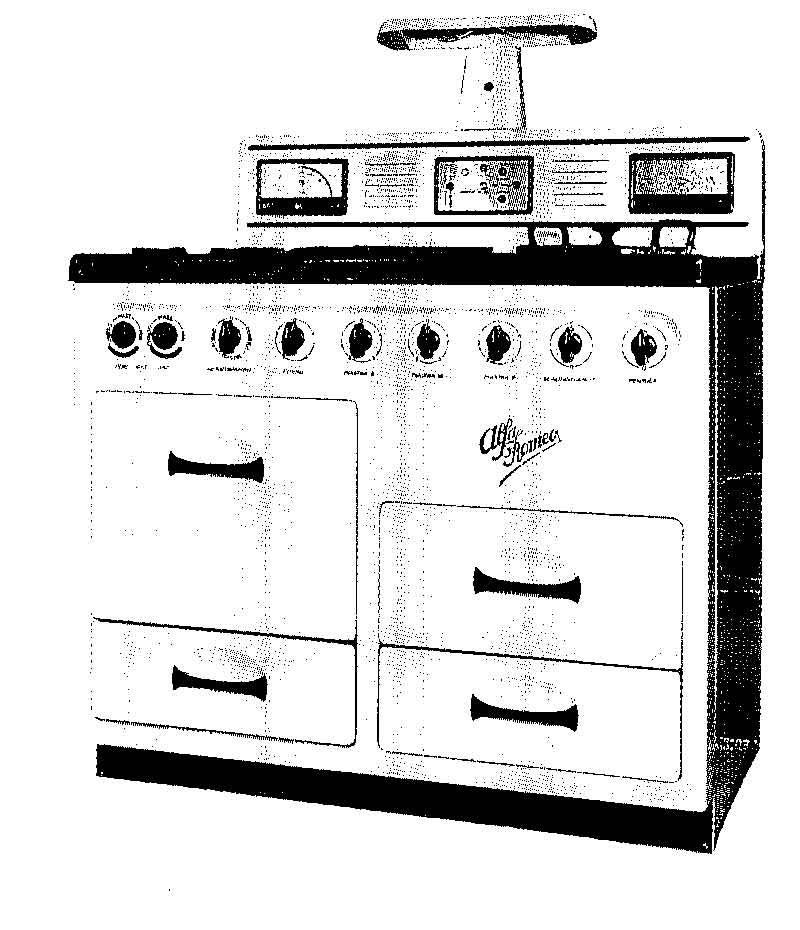
While Alfa Romeo is predominantly recognized for its automobiles, the company has also been involved in manufacturing a diverse range of commercial vehicles, including railway locomotives,[6] tractors, buses, trams, compressors, generators, and even an electric stove.[41] Additionally, the firm has manufactured engines for marine and aviation purposes.
Aircraft engines

The initial use of an Alfa engine in aviation dates back to 1910 with the Santoni-Franchini biplane.[42] Alfa Romeo’s first dedicated aircraft engine, the D2 producing 240 bhp, was developed in 1932 and installed on the Caproni 101 D2. During the 1930s, Alfa Romeo engines powered several aircraft models on a broader scale; these included the Savoia Marchetti SM.74, Savoia-Marchetti SM.75, Savoia-Marchetti SM.79, Savoia Marchetti SM.81, and Cant Z506B Airone.[43] Notably, in 1931 a contest featured Tazio Nuvolari racing his Alfa Romeo 8C 3000 Monza against a Caproni Ca.100 aircraft.[44]
During the Second World War, Alfa Romeo produced multiple aircraft engines, with the most prominent being the RA.1000 RC 41-I Monsone—a licensed adaptation of the Daimler-Benz DB 601. This powerplant enabled the manufacture of effective fighter airplanes such as the Macchi C.202 Folgore used by Italy’s military forces. Post-war, Alfa Romeo supplied engines for companies like Fiat, Aerfer, and Ambrosini. In the 1960s, their focus shifted primarily to upgrading and servicing aircraft engines from manufacturers including Curtiss-Wright, Pratt & Whitney, Rolls-Royce, and General Electric.
Alfa Romeo was also responsible for producing Italy’s inaugural turbine engine fitted on the Beechcraft King Air. The company’s Avio division was acquired by Aeritalia in 1988,[45] and from 1996 it became part of Fiat Avio.[46] Furthermore, Alfa Avio contributed to developing the T700-T6E1 engine utilized in the NHI NH90 helicopter.[47]
Marine engines
Alfa Romeo extended its engineering expertise to marine propulsion systems as well. The company's inaugural marine engine was introduced in 1929. Subsequently, during the consecutive years of 1937, 1938, and 1939, Alfa Romeo showcased its engineering prowess by making significant advancements in marine engine technology.
- (1938) 12-cylinder (4.500) 121,710 km/h
Aero-engines
- Alfa Romeo D2
- Alfa Romeo 110
- Alfa Romeo 115
- Alfa Romeo 121
- Alfa Romeo 125
- Alfa Romeo 126
- Alfa Romeo 128
- Alfa Romeo 135
- Alfa Romeo Lynx
- Alfa Romeo Mercurius
- Alfa Romeo RA.1000
- Alfa Romeo RA-1050
- Alfa Romeo R.C.10
- Alfa Romeo R.C.34
- Alfa Romeo R.C.35
- Alfa Romeo AR.318
Marketing and sponsorship


Throughout its history, Alfa Romeo has employed various marketing slogans to reinforce its brand identity. In the 1950s, the Alfa Romeo 1900 was promoted with the tagline "The family car that wins races," while during the 1960s, the phrase "racing since 1911" featured prominently in advertising campaigns. The 1970s saw the Alfa Romeo 1750 GTV marketed with the statement "if this kind of handling is good enough for our racing cars, it's good enough for you." Additionally, the Giulia Sprint GTA was advertised as "The car you drive to work is a champion." More contemporary slogans include "Mediocrity is a sin," "Driven by Passion," "Cuore Sportivo," "Beauty is not enough," and currently "Without heart we would be mere machines." Other recent taglines emphasize the unique character of the brand, such as "It's not a car, it's an Alfa Romeo," sometimes illustrated through scenarios like a couple's dispute in Italian.
In alignment with its promotional strategies, Alfa Romeo supports numerous sporting events including the prestigious Mille Miglia rally. Since 2007, it has been a sponsor of the SBK Superbike World Championship and Ducati Corse, alongside long-term involvement with the Goodwood Festival of Speed. Notably, Alfa Romeo was one of the highlighted brands during its centennial celebrations in 2010. From Monza's 2010 race onwards, the Giulietta model has served as the official safety car for Superbike World Championship events. Between 2013 and 2016, Alfa Romeo also held shirt sponsorship for the German football club Eintracht Frankfurt.
The launch of Alfa Romeo I in 2002 marked Alfa Romeo’s entry into super maxi yacht racing. This vessel secured first place in over 74 competitions, including the renowned Sydney—Hobart Race that same year. Commissioned in 2005, Alfa Romeo II measures 30 metres (98 ft) LOA and set a new monohull elapsed-time record in the 2009 Transpac race with a time of 5 days, 14 hours, 36 minutes, and 20 seconds. It came within approximately five hours of surpassing the multihull record established in 1997 by Bruno Peyron's Commodore Explorer. To date, Alfa Romeo II has achieved first place in at least 140 races. Midway through 2008 saw the debut of Alfa Romeo III, designed for competitive fleet racing under IRC regulations; this yacht measures 21.4 metres (70 ft) LOA and features interior styling inspired by the design language of the Alfa Romeo 8C Competizione.
The BBC motoring program Top Gear has frequently emphasized that owning an Alfa Romeo is almost a rite of passage for automotive enthusiasts. Hosts Jeremy Clarkson, Richard Hammond, and James May have consistently lauded Alfa Romeos for their aesthetic appeal and driving dynamics despite their historical challenges with reliability. They highlight how owners often develop a strong emotional connection with their vehicles regardless of mechanical shortcomings. Both Clarkson and May have personally owned Alfas—Clarkson a GTV6 and May an Alfa 164—and have expressed regret over having parted with them.
In its U.S. market reintroduction campaign, Alfa Romeo aired three commercials during Super Bowl LI; notably, it was the only FCA brand advertised during this event after FCA had concentrated solely on Jeep at Super Bowl 50.
In February 2013, Alfa Romeo sponsored the University of St Andrews FS fashion show where designers Luke Archer and George Jenkins were honored as 'ALFA Romeo Young Designers Of The Year' for their collections inspired by Alfa Romeo aesthetics.
For the 2022 Formula One season, Alfa Romeo announced Chinese driver Zhou Guanyu as their first representative from China—a milestone celebrated by both the team and Formula One as a significant advancement into an important emerging market.
See also
Lua error in mw.title.lua at line 359: bad argument #2 to 'title.new' (unrecognized namespace name 'Portal').
- Alfa Romeo Arese Plant
- Alfa Romeo Pomigliano d'Arco Plant
- Alfa Romeo Portello Plant
- Alfa Romeo Museum
- Circuito di Balocco
- Alfa Romeo in motorsport
- Category: Alfa Romeo engines
- Category: Alfa Romeo people
Notes
- ↑ At the time, "Anonima" referred to the corporate structure equivalent to Società anonima.
References
- ↑ Lua error in Module:Citation/CS1/Configuration at line 2123: attempt to index field '?' (a nil value).
- ↑ Lua error in Module:Citation/CS1/Configuration at line 2123: attempt to index field '?' (a nil value).
- ↑ Lua error in Module:Citation/CS1/Configuration at line 2123: attempt to index field '?' (a nil value).
- ↑ Lua error in Module:Citation/CS1/Configuration at line 2123: attempt to index field '?' (a nil value).
- ↑ Lua error in Module:Citation/CS1/Configuration at line 2123: attempt to index field '?' (a nil value).
- ↑ 6.0 6.1 6.2 Cite error: Invalid
<ref>tag; no text was provided for refs namedStory of the Alfa Romeo factory - ↑ 7.0 7.1 Cite error: Invalid
<ref>tag; no text was provided for refs namedAlfa Romeo - 100 anni di leggenda - ↑ Fusi, Luigi, Le Alfa di Romeo e Merosi, Edizione Dimensione S, Milan, 1985
- ↑ Cite error: Invalid
<ref>tag; no text was provided for refs namedenzociliberto.it/aisastoryauto - ↑ Cite error: Invalid
<ref>tag; no text was provided for refs namedalfaromeo.com - ↑ Cite error: Invalid
<ref>tag; no text was provided for refs namedshapiro - ↑ Cite error: Invalid
<ref>tag; no text was provided for refs namedwspr-racing.com - ↑ Cite error: Invalid
<ref>tag; no text was provided for refs namedwww.wspr-racing.com - ↑ 14.0 14.1 14.2 Cite error: Invalid
<ref>tag; no text was provided for refs namedAC4459a - ↑ Cite error: Invalid
<ref>tag; no text was provided for refs namedAC4459c - ↑ 16.0 16.1 Cite error: Invalid
<ref>tag; no text was provided for refs namednyt1979 - ↑ 17.0 17.1 Cite error: Invalid
<ref>tag; no text was provided for refs namedeurlex - ↑ 18.0 18.1 Cite error: Invalid
<ref>tag; no text was provided for refs namednyt1986 - ↑ Seidler, p. 19
- ↑ Lua error in Module:Citation/CS1/Configuration at line 2123: attempt to index field '?' (a nil value).
- ↑ Lua error in Module:Citation/CS1/Configuration at line 2123: attempt to index field '?' (a nil value).
- ↑ Lua error in Module:Citation/CS1/Configuration at line 2123: attempt to index field '?' (a nil value).
- ↑ Lua error in Module:Citation/CS1/Configuration at line 2123: attempt to index field '?' (a nil value).
- ↑ Lua error in Module:Citation/CS1/Configuration at line 2123: attempt to index field '?' (a nil value).
- ↑ Lua error in Module:Citation/CS1/Configuration at line 2123: attempt to index field '?' (a nil value).
- ↑ 26.0 26.1 Lua error in Module:Citation/CS1/Configuration at line 2123: attempt to index field '?' (a nil value).
- ↑ Cite error: Invalid
<ref>tag; no text was provided for refs namedThe News Wheel 2015 - ↑ 28.0 28.1 Cite error: Invalid
<ref>tag; no text was provided for refs namedAutoBadge - ↑ Cite error: Invalid
<ref>tag; no text was provided for refs namedultimateitaly.com - ↑ 30.0 30.1 30.2 Fusi (1978), p. 807–808.
- ↑ 31.0 31.1 31.2 Fusi (1978), p. 809–810.
- ↑ Fusi (1978), p. 811–812.
- ↑ Fusi (1978), p. 112.
- ↑ 34.0 34.1 34.2 Fusi (1978), p. 419.
- ↑ Lua error in Module:Citation/CS1/Configuration at line 2123: attempt to index field '?' (a nil value).
- ↑ Lua error in Module:Citation/CS1/Configuration at line 2123: attempt to index field '?' (a nil value).
- ↑ Lua error in Module:Citation/CS1/Configuration at line 2123: attempt to index field '?' (a nil value).
- ↑ Cite error: Invalid
<ref>tag; no text was provided for refs namedtramz.com - ↑ Cite error: Invalid
<ref>tag; no text was provided for refs namedsparvagssallskapet.se - ↑ Cite error: Invalid
<ref>tag; no text was provided for refs namedsptc.spb.ru - ↑ http://forum.clubalfa.it/attachment.php?attachmentid=39226&d=1254043793 Archived 28 March 2014 at the Wayback MachineLua error in Module:Citation/CS1/Configuration at line 2123: attempt to index field '?' (a nil value).Lua error in Module:Citation/CS1/Configuration at line 2123: attempt to index field '?' (a nil value).Produced post-WWII in approximately 500 units
- ↑ Lua error in Module:Citation/CS1/Configuration at line 2123: attempt to index field '?' (a nil value).
- ↑ Lua error in Module:Citation/CS1/Configuration at line 2123: attempt to index field '?' (a nil value).
- ↑ Lua error in Module:Citation/CS1/Configuration at line 2123: attempt to index field '?' (a nil value).
- ↑ Lua error in Module:Citation/CS1/Configuration at line 2123: attempt to index field '?' (a nil value).
- ↑ Lua error in Module:Citation/CS1/Configuration at line 2123: attempt to index field '?' (a nil value).
- ↑ Lua error in Module:Citation/CS1/Configuration at line 2123: attempt to index field '?' (a nil value).
Bibliography
- Lua error in Module:Citation/CS1/Configuration at line 2123: attempt to index field '?' (a nil value).
Further reading
- Borgeson, Griffith (1990). The Alfa Romeo Tradition. Haynes (Foulis) Publishing Group. Somerset, UK. ISBN 0-85429-875-4.
- Braden, Pat (1994). Alfa Romeo Owner's Bible. Cambridge: Bentley Publishers. ISBN 0-8376-0707-8.
- Stefano d'Amico and Maurizio Tabuchi (2004). Alfa Romeo Production Cars. Giorgio NADA Editore. ISBN 88-7911-322-4.
- Hull and Slater (1982). Alfa Romeo: a History. Transport Bookman Publications. ISBN 0-85184-041-8.
- Venables, David (2000). First among Champions. Osceola: Motorbooks International. ISBN 1-85960-631-8.
- Owen, David. Great Marques, Alfa Romeo. London: Octopus Books, 1985. ISBN 0-7064-2219-8.
- Owen, David. Alfa Romeo: Always with Passion. Haynes Publications, 1999. ISBN 1-85960-628-8.
- Moore, Simon (1987). Immortal 2.9. Parkside Pubns. ISBN 978-0-9617266-0-7.
- McDonough, E., & Collins, P. (2005). Alfa Romeo Tipo 33. Veloce Publishing. ISBN 1-904788-71-8.
- Tipler, John. Alfa Romeo Spider, The complete history. Crowood Press (UK), 1998. ISBN 1-86126-122-5.
- Tipler, John. Alfa Romeo Giulia Coupe GT & GTA. Veloce Publishing, 2003. ISBN 1-903706-47-5.
- Styles, David G. "Alfa Romeo – The Legend Revived", Dalton Watson 1989. ISBN 978-0-901564-75-7.
- Styles, David G. "Alfa Romeo – Spider, Alfasud & Alfetta GT", Crowood Press 1992. ISBN 1-85223-636-1.
- Styles, David G. "Alfa Romeo – The Spirit of Milan", Sutton Publishing 1999. ISBN 0-7509-1924-8.
External links

- Lua error in Module:Official_website at line 90: attempt to index field 'wikibase' (a nil value).
| Production cars | Competition vehicles | |
|---|---|---|
| 1910 |
1910–1920 24 HP |
1911 15 HP Corsa |
| 1920 |
1921–1922 20–30 HP |
1922 RL Super Sport |
| 1930 |
1931–1934 8C 2300 |
1931 Tipo A |
| 1940 |
1948 6C 2500 Competizione | |
| 1950 |
1950–1958 1900 |
1951 159 |
| 1960 |
1962–1968 2600 1965–1977 GT Junior |
1960 Giulietta SZ |
| 1970 |
1970-1977 Montreal < br/> 1972-1983 Alfasud < br/> 1972-1984 Alfetta saloon < br/> 1974-1987 Alfetta GT/GTV < br/> 1976-1989 Alfasud Sprint < br/> 1977-1985 Nuova Giulietta < br/> 1979-1986 Alfa 6 |
1972 33/4 < br/> 1973 33TT12 < br/> 1976 33SC12 < br/> 1979 177 < br/> 1979 179 |
| 1980 |
1983-1994 33 < br/> 1984-1987 Arna < br/> 1984-1987 90 < br/> 1985-1992 75 < br/> 1987-1998 164 < br/> 1989-1993 SZ/RZ |
1982
1982 [ [ Alpha Romeo 182 ] ] 182 |
Lua error in Module:Authority_control at line 159: attempt to index field 'wikibase' (a nil value).
- Pages with reference errors
- Pages with broken file links
- Pages with script errors
- Webarchive template wayback links
- Articles with short description
- Use dmy dates from September 2021
- Articles with invalid date parameter in template
- Pages with Italian IPA
- Articles containing Italian-language text
- Articles with hatnote templates targeting a nonexistent page
- Commons category link from Wikidata
- Alfa Romeo
- Stellantis
- Sports car manufacturers
- Trolleybus manufacturers
- Motor vehicle manufacturers based in Milan
- World Sportscar Championship teams
- Defunct bus manufacturers
- Defunct truck manufacturers
- Aircraft engine manufacturers of Italy
- Italian companies established in 1910
- Vehicle manufacturing companies established in 1910
- Italian brands
- Formerly government-owned companies of Italy
- Car brands
- Luxury motor vehicle manufacturers
- Electric vehicle manufacturers of Italy
- Car manufacturers of Italy
- Motor vehicle manufacturers based in Turin
- Altagamma members